Bunker Archaeology - Paul Virilio
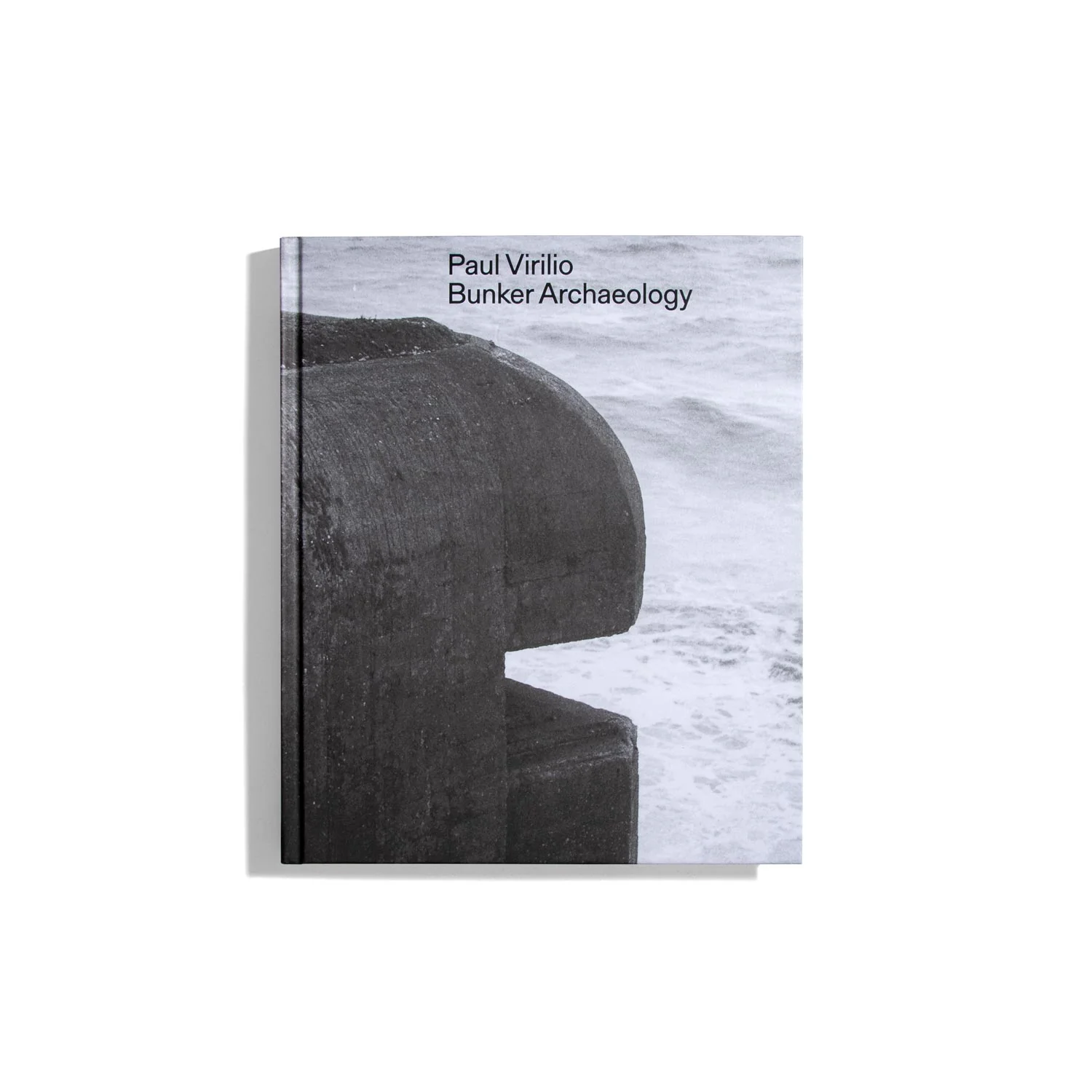
The reputation as an auteur that Paul Virilio (1932–2018) enjoys today derives from the work he did for his Bunker Archeology. When, in the second half of the 1950s, he began photographing abandoned Second World War bunkers along France’s Atlantic coast, he was working with glass as an artistic medium. In 1966, he presented his photographs to the public for the first time in the magazine architecture principe, which he co-edited. At the time, he was particularly interested in the architectural aspects of these wartime installations. He saw the bunkers as “harbingers of a new architecture”, which he sought to capture in the term “cryptic architecture”. The first exhibition of Virilio’s Bunker Archeology was staged at the Centre Pompidou in 1975, while the museum was still in the process of being established. His seminal book was published in conjunction with this. It laid out all the motifs of his philosophical thinking: military space and communications warfare, camouflage and acceleration, a scrupulous reading of the present coupled with a desire for philosophical speculation. Although it is almost fifty years since the work was first published, Bunker Archeology is still full of connections to the present. To coincide with an exhibition at the Centre Pompidou, a new edition of the book is being published in French, English, and German.
Produktinformationen
Produktinformationen
Versand & Rückgabe
Versand & Rückgabe
Description
The reputation as an auteur that Paul Virilio (1932–2018) enjoys today derives from the work he did for his Bunker Archeology. When, in the second half of the 1950s, he began photographing abandoned Second World War bunkers along France’s Atlantic coast, he was working with glass as an artistic medium. In 1966, he presented his photographs to the public for the first time in the magazine architecture principe, which he co-edited. At the time, he was particularly interested in the architectural aspects of these wartime installations. He saw the bunkers as “harbingers of a new architecture”, which he sought to capture in the term “cryptic architecture”. The first exhibition of Virilio’s Bunker Archeology was staged at the Centre Pompidou in 1975, while the museum was still in the process of being established. His seminal book was published in conjunction with this. It laid out all the motifs of his philosophical thinking: military space and communications warfare, camouflage and acceleration, a scrupulous reading of the present coupled with a desire for philosophical speculation. Although it is almost fifty years since the work was first published, Bunker Archeology is still full of connections to the present. To coincide with an exhibition at the Centre Pompidou, a new edition of the book is being published in French, English, and German.