Why Politics Fails
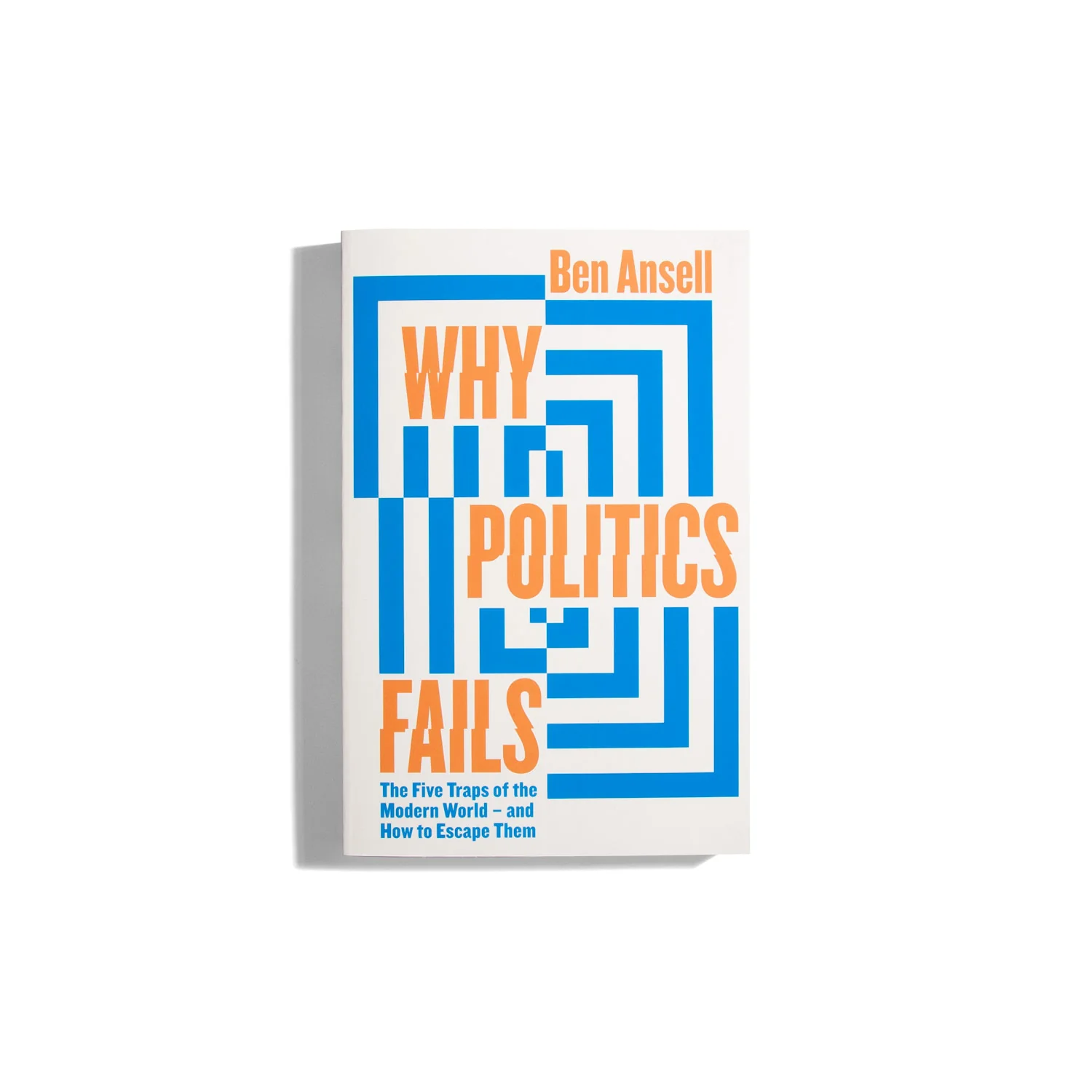
Why do the revolving doors of power always leave us disappointed? In Why Politics Fails, award-winning Oxford professor Ben Ansell shows that it’s not the politicians that are the problem, it’s that our collective goals result in five political ‘traps’. Democracy: we all want a say in how we’re governed, but it’s impossible to have any true ‘will of the people’. Equality: we want to be treated equally, but equal rights and equal outcomes undermine each other. Solidarity: we want a safety net when times are tough, but often we care about solidarity only when we need it ourselves. Security: we want protecting from harm, but not if it undermines our freedoms. Prosperity: we want to be richer tomorrow, but what makes us richer in the short run makes us poorer over the long haul. You’ve probably noticed a pattern here, which is that our self-interest undermines our ability to deliver on our collective goals. And these traps reinforce one another, so a polarized democracy can worsen inequality; a threadbare social safety net can worsen crime; runaway climate change will threaten global peace. Drawing on examples from Ancient Greece through Brexit and using his own counterintuitive and pathbreaking research – on why democracy thrives under high inequality, and how increased political and social equality can lead to greater class inequality – Ansell vividly illustrates how we can escape the political traps of our imperfect world. He shows that politics won’t end, but that it doesn’t have to fail.
Original: $27.08
-65%$27.08
$9.48Produktinformationen
Produktinformationen
Versand & Rückgabe
Versand & Rückgabe
Description
Why do the revolving doors of power always leave us disappointed? In Why Politics Fails, award-winning Oxford professor Ben Ansell shows that it’s not the politicians that are the problem, it’s that our collective goals result in five political ‘traps’. Democracy: we all want a say in how we’re governed, but it’s impossible to have any true ‘will of the people’. Equality: we want to be treated equally, but equal rights and equal outcomes undermine each other. Solidarity: we want a safety net when times are tough, but often we care about solidarity only when we need it ourselves. Security: we want protecting from harm, but not if it undermines our freedoms. Prosperity: we want to be richer tomorrow, but what makes us richer in the short run makes us poorer over the long haul. You’ve probably noticed a pattern here, which is that our self-interest undermines our ability to deliver on our collective goals. And these traps reinforce one another, so a polarized democracy can worsen inequality; a threadbare social safety net can worsen crime; runaway climate change will threaten global peace. Drawing on examples from Ancient Greece through Brexit and using his own counterintuitive and pathbreaking research – on why democracy thrives under high inequality, and how increased political and social equality can lead to greater class inequality – Ansell vividly illustrates how we can escape the political traps of our imperfect world. He shows that politics won’t end, but that it doesn’t have to fail.