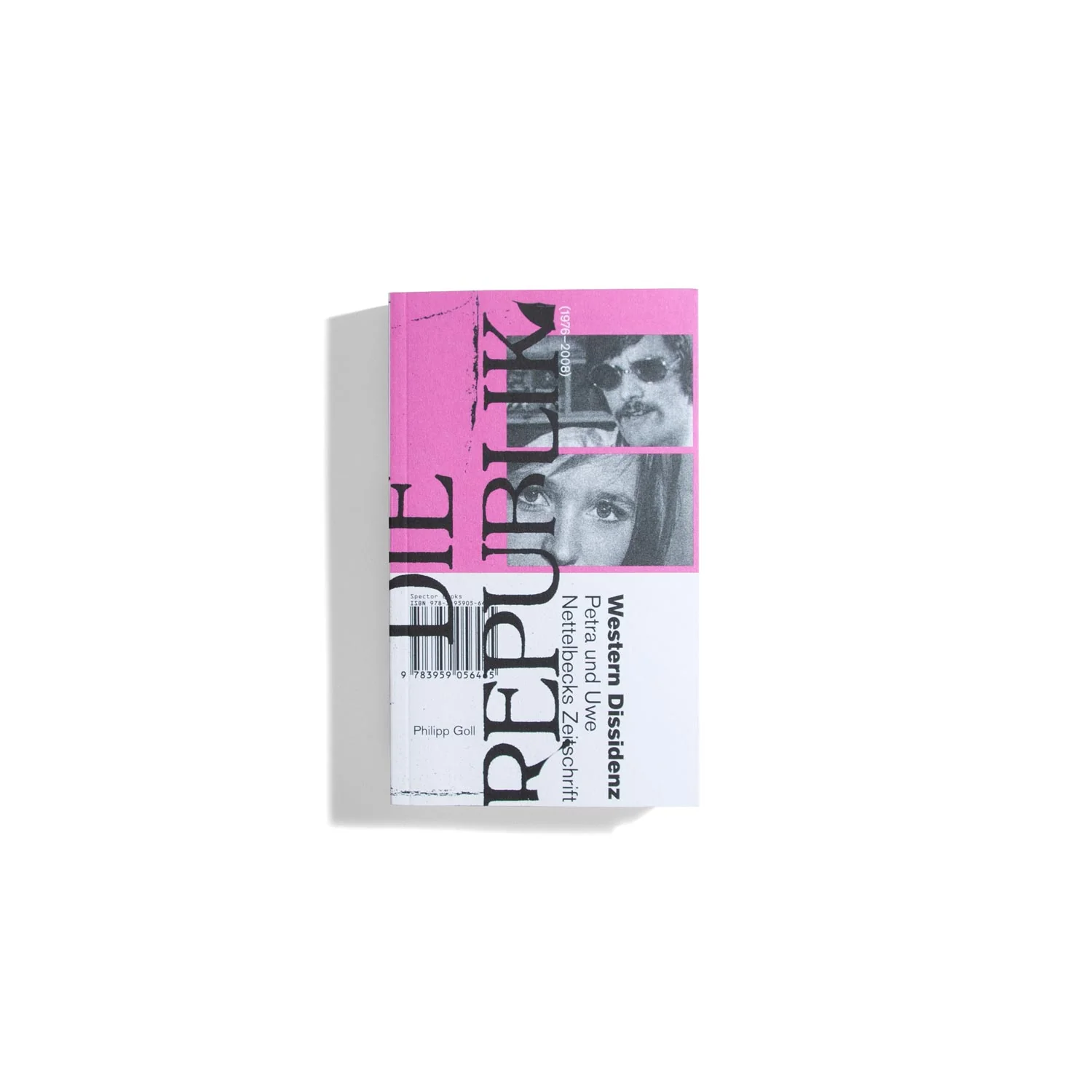
Western Dissidenz: Die Republik (1976–2008)
In 1976, the film critic, court reporter, and music producer of the Krautrock band Faust, Uwe Nettelbeck, began editing the magazine DIE REPUBLIK, soon joined by his partner, the well-known television announcer and actress Petra Nettelbeck, as co-editor. Western Dissidence presents, through selected readings and archival materials, a magazine emerging from the 1968 movement that styled itself as an outlaw to the left-alternative literary scene of the time. The book traces the rise of a form of literary production shaped by patterns of popular-cultural perception—one that unfolded outside the spectacular proclamations of Pop. Against the historical backdrop of the German Autumn, unexpected dissident forms of literary resistance come to the fore. Interviews with readers and contributors—including Gisela Stelly Augstein, Klaus Theweleit, among others—accompany the readings and offer insight into the network surrounding DIE REPUBLIK, which bridged the counterculture and the establishment of the Federal Republic of Germany.
Produktinformationen
Produktinformationen
Versand & Rückgabe
Versand & Rückgabe
Description
In 1976, the film critic, court reporter, and music producer of the Krautrock band Faust, Uwe Nettelbeck, began editing the magazine DIE REPUBLIK, soon joined by his partner, the well-known television announcer and actress Petra Nettelbeck, as co-editor. Western Dissidence presents, through selected readings and archival materials, a magazine emerging from the 1968 movement that styled itself as an outlaw to the left-alternative literary scene of the time. The book traces the rise of a form of literary production shaped by patterns of popular-cultural perception—one that unfolded outside the spectacular proclamations of Pop. Against the historical backdrop of the German Autumn, unexpected dissident forms of literary resistance come to the fore. Interviews with readers and contributors—including Gisela Stelly Augstein, Klaus Theweleit, among others—accompany the readings and offer insight into the network surrounding DIE REPUBLIK, which bridged the counterculture and the establishment of the Federal Republic of Germany.