The Synthetic Eye - Fred Ritchin
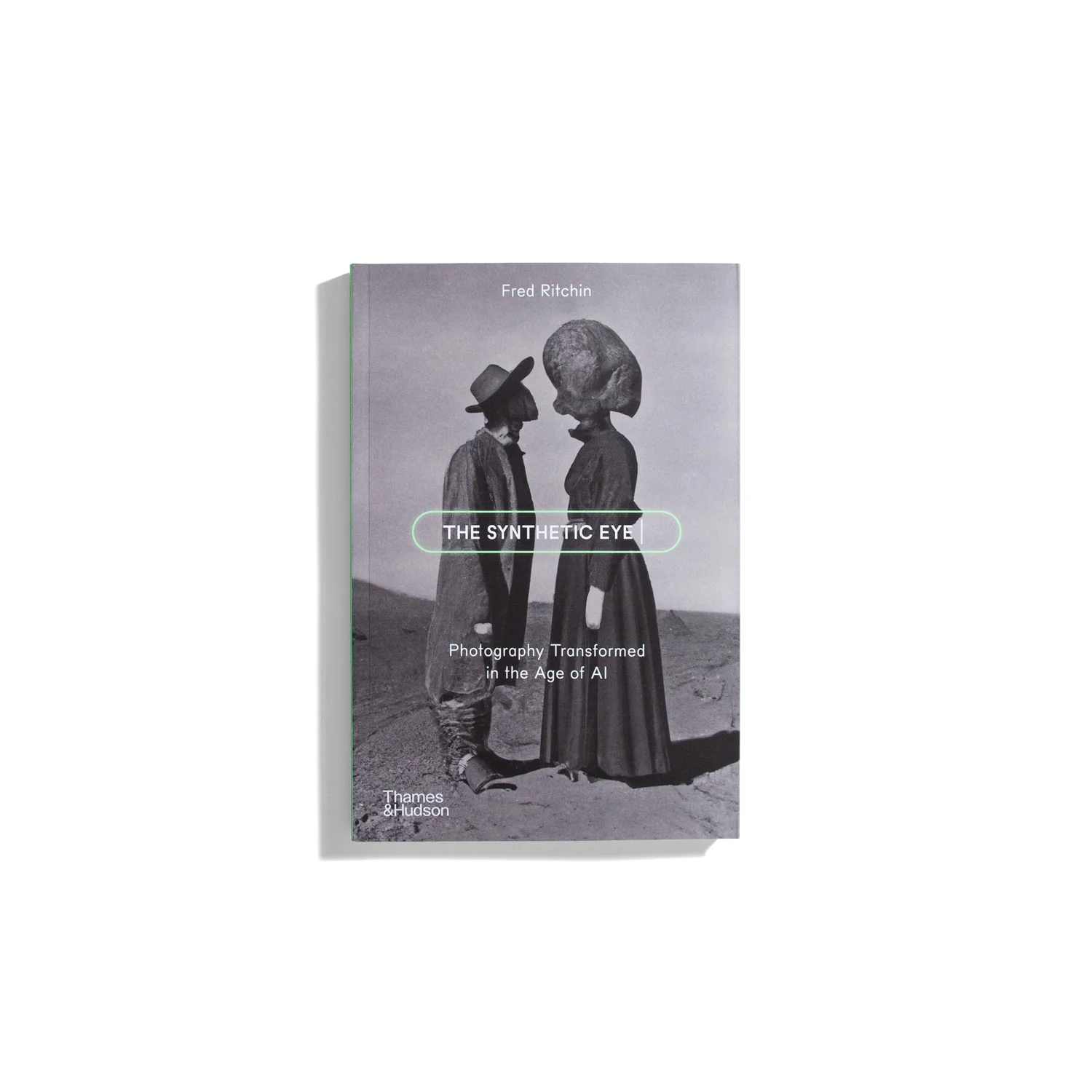
The revolution caused by artificial intelligence in terms of what a photograph can and cannot do is profound. This book looks at photography’s strengths, what it has meant for individuals and for society, its massive transformations caused by a variety of factors in the digital age, and the newer possibilities for image making. These include old and new media, with an emphasis on synthetic imaging as both a positive and terrifying development.
In 1840, a year after photography’s invention, the painter Paul Delaroche exclaimed, “From now on, painting is dead.” Photography was quicker and cheaper as a representational medium and more realistic, its invention also liberated painters to become much more adventurous, embracing approaches that included impressionism, cubism, minimalism, and abstract expressionism. So too photographers are being challenged today. Many have responded with new strategies, but more innovation is needed. Can photographers be as radically expansive and revolutionary as painters were? Can they preserve or even expand the photograph’s role in society as a credible witness? Can the photographic image morph into forms previously unimagined?
The Synthetic Eye is about this transformative revolution. How can synthetic imagery be utilized to amplify our understanding of ourselves and our worlds? Can an alternative photography deepen and expand the medium’s previous reach? What are the pitfalls? How will our senses of the real, the possible, and the actual be affected?
Produktinformationen
Produktinformationen
Versand & Rückgabe
Versand & Rückgabe
Description
The revolution caused by artificial intelligence in terms of what a photograph can and cannot do is profound. This book looks at photography’s strengths, what it has meant for individuals and for society, its massive transformations caused by a variety of factors in the digital age, and the newer possibilities for image making. These include old and new media, with an emphasis on synthetic imaging as both a positive and terrifying development.
In 1840, a year after photography’s invention, the painter Paul Delaroche exclaimed, “From now on, painting is dead.” Photography was quicker and cheaper as a representational medium and more realistic, its invention also liberated painters to become much more adventurous, embracing approaches that included impressionism, cubism, minimalism, and abstract expressionism. So too photographers are being challenged today. Many have responded with new strategies, but more innovation is needed. Can photographers be as radically expansive and revolutionary as painters were? Can they preserve or even expand the photograph’s role in society as a credible witness? Can the photographic image morph into forms previously unimagined?
The Synthetic Eye is about this transformative revolution. How can synthetic imagery be utilized to amplify our understanding of ourselves and our worlds? Can an alternative photography deepen and expand the medium’s previous reach? What are the pitfalls? How will our senses of the real, the possible, and the actual be affected?