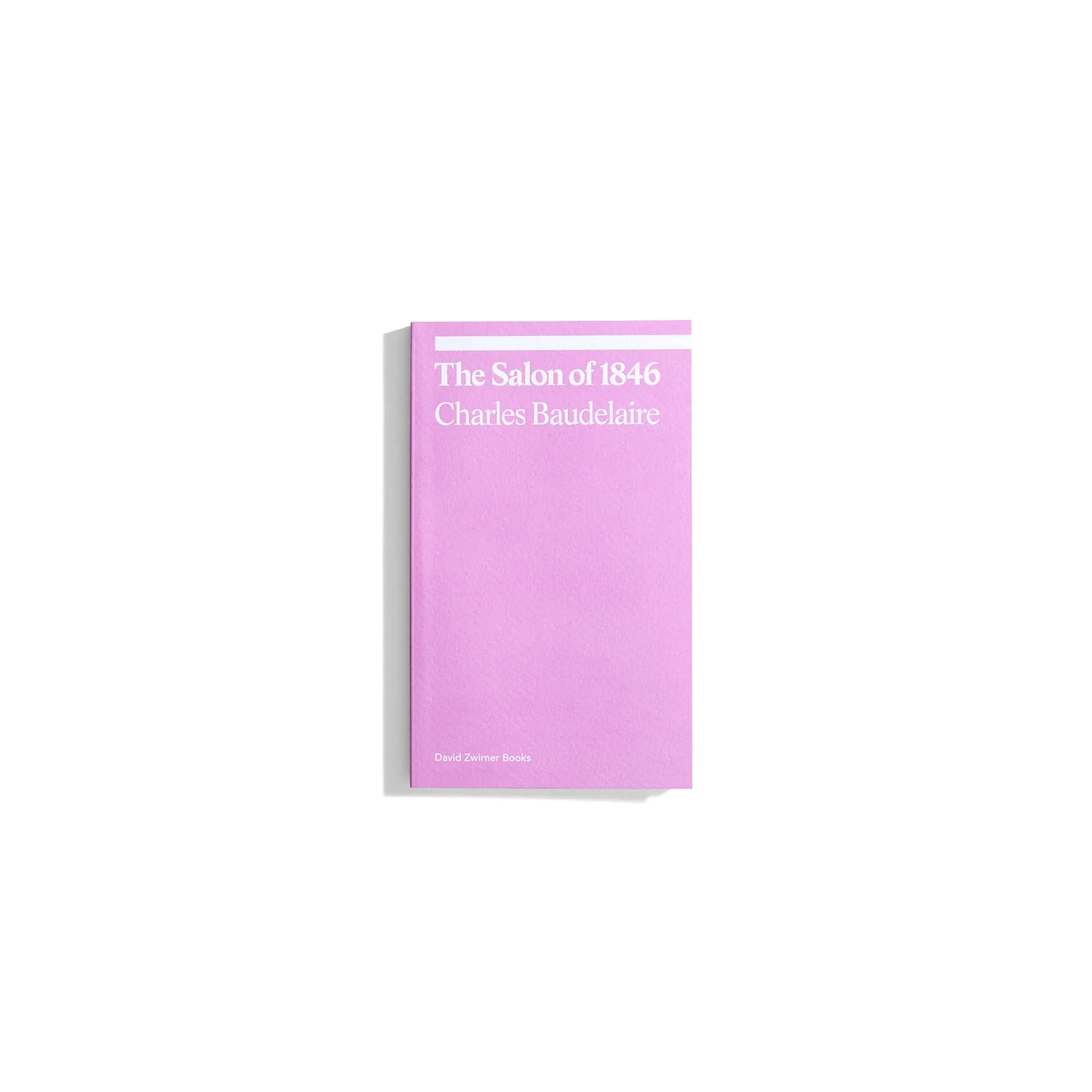
The Salon of 1846 - Charles Baudelaire (ekphrasis series)
In his introduction to Charles Baudelaire’s Salon of 1846, the renowned art historian Michael Fried presents a new take on the French poet and critic’s ideas on art, criticism, romanticism, and the paintings of Delacroix.moreCharles Baudelaire, considered a father of modern poetry, wrote some of the most daring and influential prose of the nineteenth century. Prior to publishing the international bestseller Les Fleurs du mal (1857), he was already notable as a forthright and witty critic of art and literature. Captivated by the Salons in Paris, Baudelaire took to writing to express his theories on modern art and art philosophy. The Salon of 1846 expands upon the tenets of romanticism as Baudelaire methodically takes his reader through paintings by Delacroix and Ingres, illuminating his belief that the pursuit of the ideal must be paramount in artistic expression. Here we also see Baudelaire caught in a fundamental struggle with the urban commodity of capitalism developing in Paris at that time. Baudelaire’s text proves to be a useful lens for understanding art criticism in mid-nineteenth-century France, as well as the changing opinions regarding the essential nature of romanticism and the artist as creative genius. Acclaimed art historian and art critic Michael Fried’s introduction offers a new reading of Baudelaire’s seminal text and highlights the importance of his writing and its relevance to today’s audience.
Original: $16.49
-65%$16.49
$5.77Produktinformationen
Produktinformationen
Versand & Rückgabe
Versand & Rückgabe
Description
In his introduction to Charles Baudelaire’s Salon of 1846, the renowned art historian Michael Fried presents a new take on the French poet and critic’s ideas on art, criticism, romanticism, and the paintings of Delacroix.moreCharles Baudelaire, considered a father of modern poetry, wrote some of the most daring and influential prose of the nineteenth century. Prior to publishing the international bestseller Les Fleurs du mal (1857), he was already notable as a forthright and witty critic of art and literature. Captivated by the Salons in Paris, Baudelaire took to writing to express his theories on modern art and art philosophy. The Salon of 1846 expands upon the tenets of romanticism as Baudelaire methodically takes his reader through paintings by Delacroix and Ingres, illuminating his belief that the pursuit of the ideal must be paramount in artistic expression. Here we also see Baudelaire caught in a fundamental struggle with the urban commodity of capitalism developing in Paris at that time. Baudelaire’s text proves to be a useful lens for understanding art criticism in mid-nineteenth-century France, as well as the changing opinions regarding the essential nature of romanticism and the artist as creative genius. Acclaimed art historian and art critic Michael Fried’s introduction offers a new reading of Baudelaire’s seminal text and highlights the importance of his writing and its relevance to today’s audience.