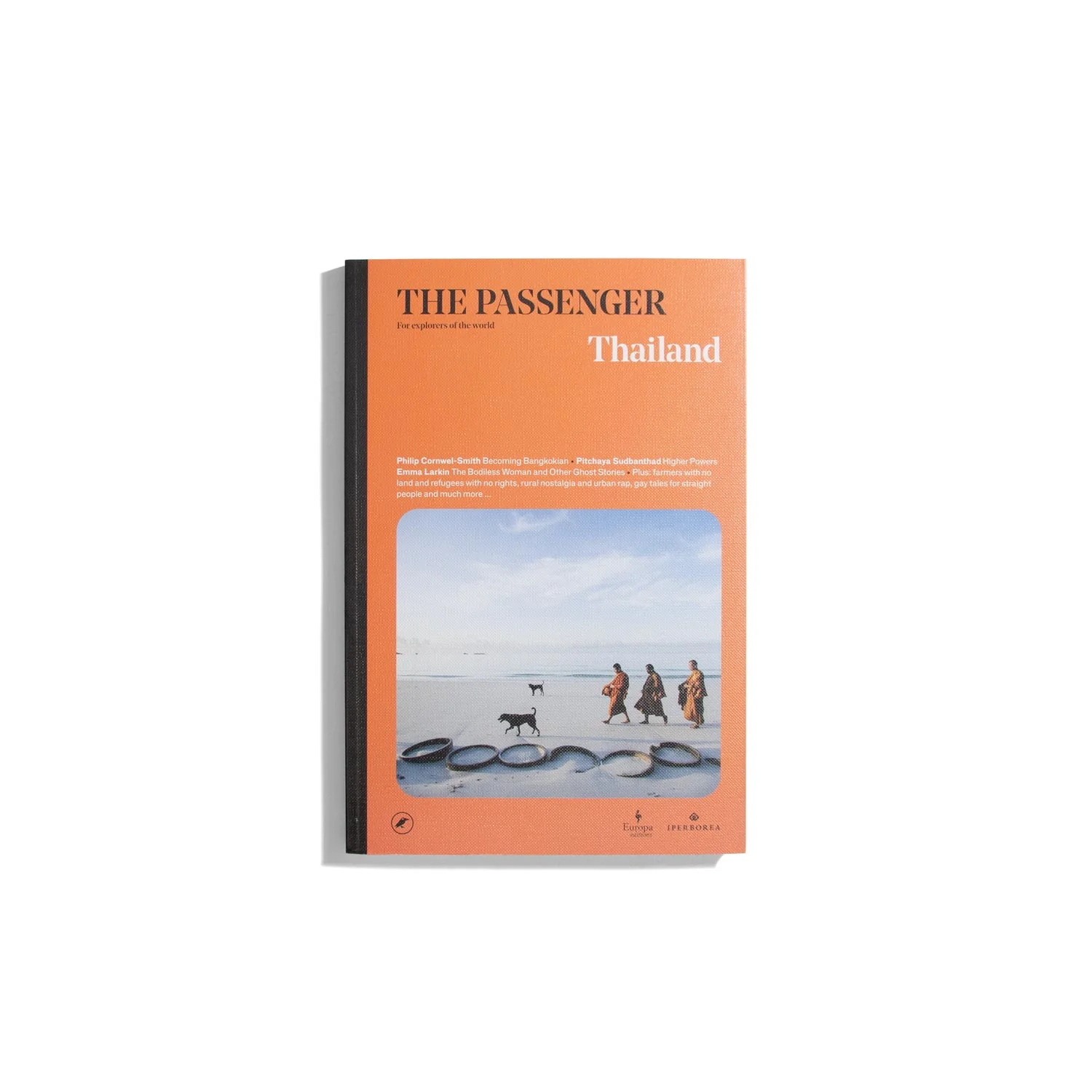
The Passenger - Thailand
To better understand Thailand, one must try to familiarise oneself with the concept of thainess, or thai-ness, the ethnocentric ideology that accompanied the development of the modern Thai nation throughout the 20th century and whose echoes have all but faded away. Indeed, on closer inspection, the causes of many of the rifts that agitate contemporary society, some more evident and others more subtle, can be traced back to the desire to create a hegemonic culture in a multi-ethnic country, an imposition that has often taken the form of forced and violent thaification. From the north - where prejudice against the Isan people persists - to the south - where the separatist impulses of the Malay and Muslim-majority provinces are repressed by draconian special laws - the clash between the centre (Bangkok) and the periphery is a wound that has never healed. Not only in geographical terms, but also in hierarchical terms, in terms of the centralisation of power, as for example in the religious sphere, where the state tries, often in vain, to tame the unofficial currents of Buddhism. Even behind the recent street demonstrations and the many twists and turns (and the state) lie similar dynamics: the opposition between those who are on the fringes of society, or belong to an emerging but still voiceless class, and the conservative aristocratic and business elite close to the centres of power.
If it wants to emancipate itself from its limiting role as a coveted tourist destination, assert its economic clout, and project its soft power into the world, Thailand must take an example from the courage and critical spirit of this new generation that cherishes freedom and civil rights. Perhaps, after all, it is precisely overbearingness that is an un-Thai trait, in a society that also has a sunny face of harmony, kindness, acceptance of minorities and refugees, and (relative) tolerance towards the lgbtq+ community. However much effort is made to impose a single culture, ethnicity and religion, the real Thai strength seems to be syncretism, metabolism.
Produktinformationen
Produktinformationen
Versand & Rückgabe
Versand & Rückgabe
Description
To better understand Thailand, one must try to familiarise oneself with the concept of thainess, or thai-ness, the ethnocentric ideology that accompanied the development of the modern Thai nation throughout the 20th century and whose echoes have all but faded away. Indeed, on closer inspection, the causes of many of the rifts that agitate contemporary society, some more evident and others more subtle, can be traced back to the desire to create a hegemonic culture in a multi-ethnic country, an imposition that has often taken the form of forced and violent thaification. From the north - where prejudice against the Isan people persists - to the south - where the separatist impulses of the Malay and Muslim-majority provinces are repressed by draconian special laws - the clash between the centre (Bangkok) and the periphery is a wound that has never healed. Not only in geographical terms, but also in hierarchical terms, in terms of the centralisation of power, as for example in the religious sphere, where the state tries, often in vain, to tame the unofficial currents of Buddhism. Even behind the recent street demonstrations and the many twists and turns (and the state) lie similar dynamics: the opposition between those who are on the fringes of society, or belong to an emerging but still voiceless class, and the conservative aristocratic and business elite close to the centres of power.
If it wants to emancipate itself from its limiting role as a coveted tourist destination, assert its economic clout, and project its soft power into the world, Thailand must take an example from the courage and critical spirit of this new generation that cherishes freedom and civil rights. Perhaps, after all, it is precisely overbearingness that is an un-Thai trait, in a society that also has a sunny face of harmony, kindness, acceptance of minorities and refugees, and (relative) tolerance towards the lgbtq+ community. However much effort is made to impose a single culture, ethnicity and religion, the real Thai strength seems to be syncretism, metabolism.