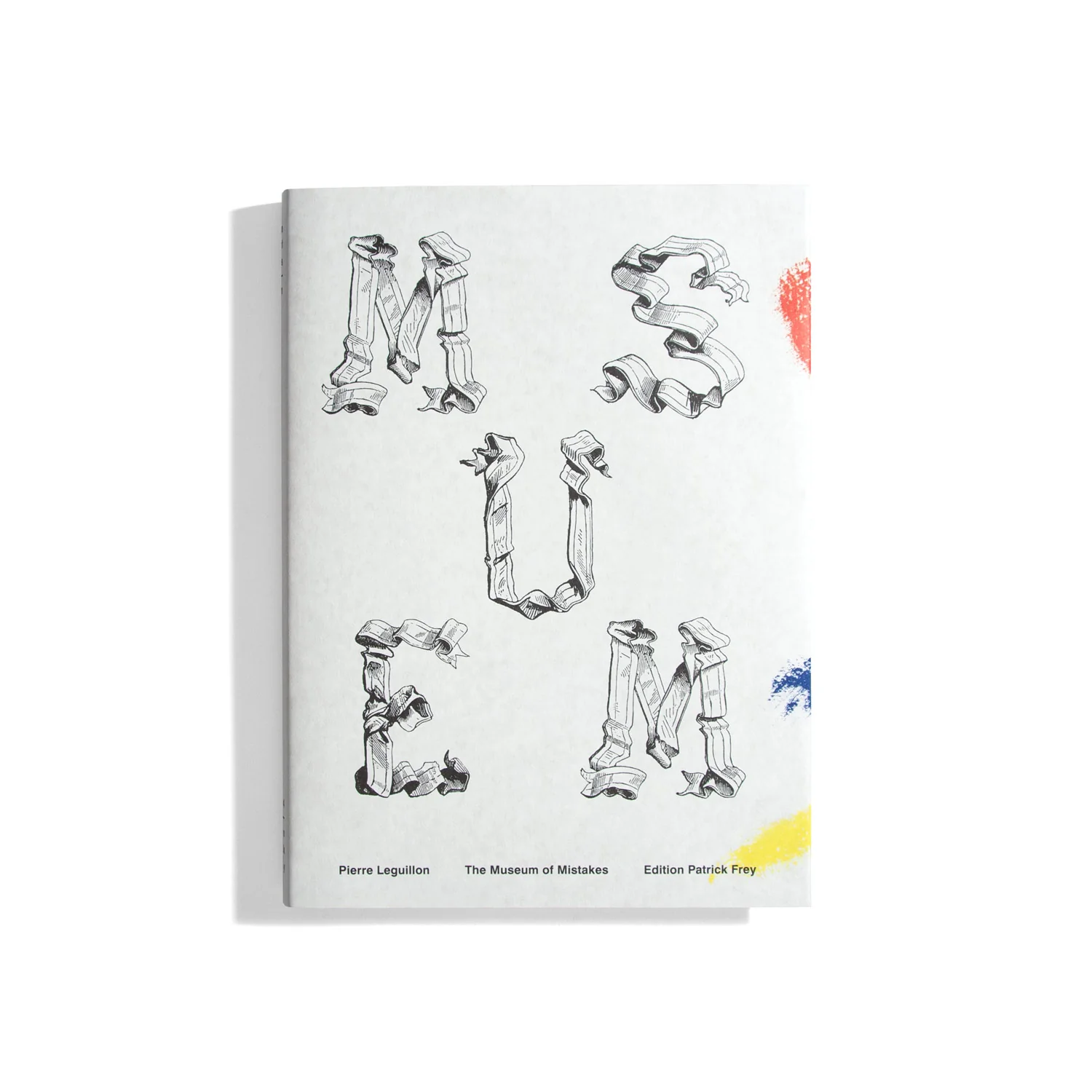
The Museum of Mistakes
This is the first book to present a wide selection of works from the Musée des Erreurs, or Museum of Mistakes. moreFounded in Brussels in 2013 by Pierre Leguillon, the Musée des Erreurs is a traveling exhibition that encamps in the halls of brick-and-mortar museums—like a traveling circus that comes to town—and then moves on. The rest of the time, the collection is stored in the artist’s studio apartment, mainly in his kitchen cupboards. Most of the items are serially manufactured and of negligible material value: postcards, record sleeves, posters large and small, pieces of fabric, ceramics, folk art, children’s drawings, and other miscellany. This book also includes items deemed too small, fragile or insignificant to take on tour in the past, as well as the artist’s own photographs of everyday street scenes that shed some light on various facets of the collection. Whether signed or anonymous, these artefacts defy any claims of authoritativeness in an age in which visual culture is shared on social media and all over the web, without distinctions as to substantive or aesthetic value, often with no captions and, all too frequently, with erroneous attributions. For Leguillon, the constant sorting and reshuffling of the collection helps us to revisit conventional interpretations and subvert, with an ample dose of humor, the sort of cultural “prêt-à-porter” so many museums serve us up nowadays. Essays by Patricia Falguières and Morad Montazami situate the Musée des Erreurs in the tradition of art museums and the phenomenon of cultural appropriation. And Carrie Pilto contributes freestyle captions commenting on the featured items.
Produktinformationen
Produktinformationen
Versand & Rückgabe
Versand & Rückgabe
Description
This is the first book to present a wide selection of works from the Musée des Erreurs, or Museum of Mistakes. moreFounded in Brussels in 2013 by Pierre Leguillon, the Musée des Erreurs is a traveling exhibition that encamps in the halls of brick-and-mortar museums—like a traveling circus that comes to town—and then moves on. The rest of the time, the collection is stored in the artist’s studio apartment, mainly in his kitchen cupboards. Most of the items are serially manufactured and of negligible material value: postcards, record sleeves, posters large and small, pieces of fabric, ceramics, folk art, children’s drawings, and other miscellany. This book also includes items deemed too small, fragile or insignificant to take on tour in the past, as well as the artist’s own photographs of everyday street scenes that shed some light on various facets of the collection. Whether signed or anonymous, these artefacts defy any claims of authoritativeness in an age in which visual culture is shared on social media and all over the web, without distinctions as to substantive or aesthetic value, often with no captions and, all too frequently, with erroneous attributions. For Leguillon, the constant sorting and reshuffling of the collection helps us to revisit conventional interpretations and subvert, with an ample dose of humor, the sort of cultural “prêt-à-porter” so many museums serve us up nowadays. Essays by Patricia Falguières and Morad Montazami situate the Musée des Erreurs in the tradition of art museums and the phenomenon of cultural appropriation. And Carrie Pilto contributes freestyle captions commenting on the featured items.