Quitting Your Day Job: Chauncey Hare's Photographic Work
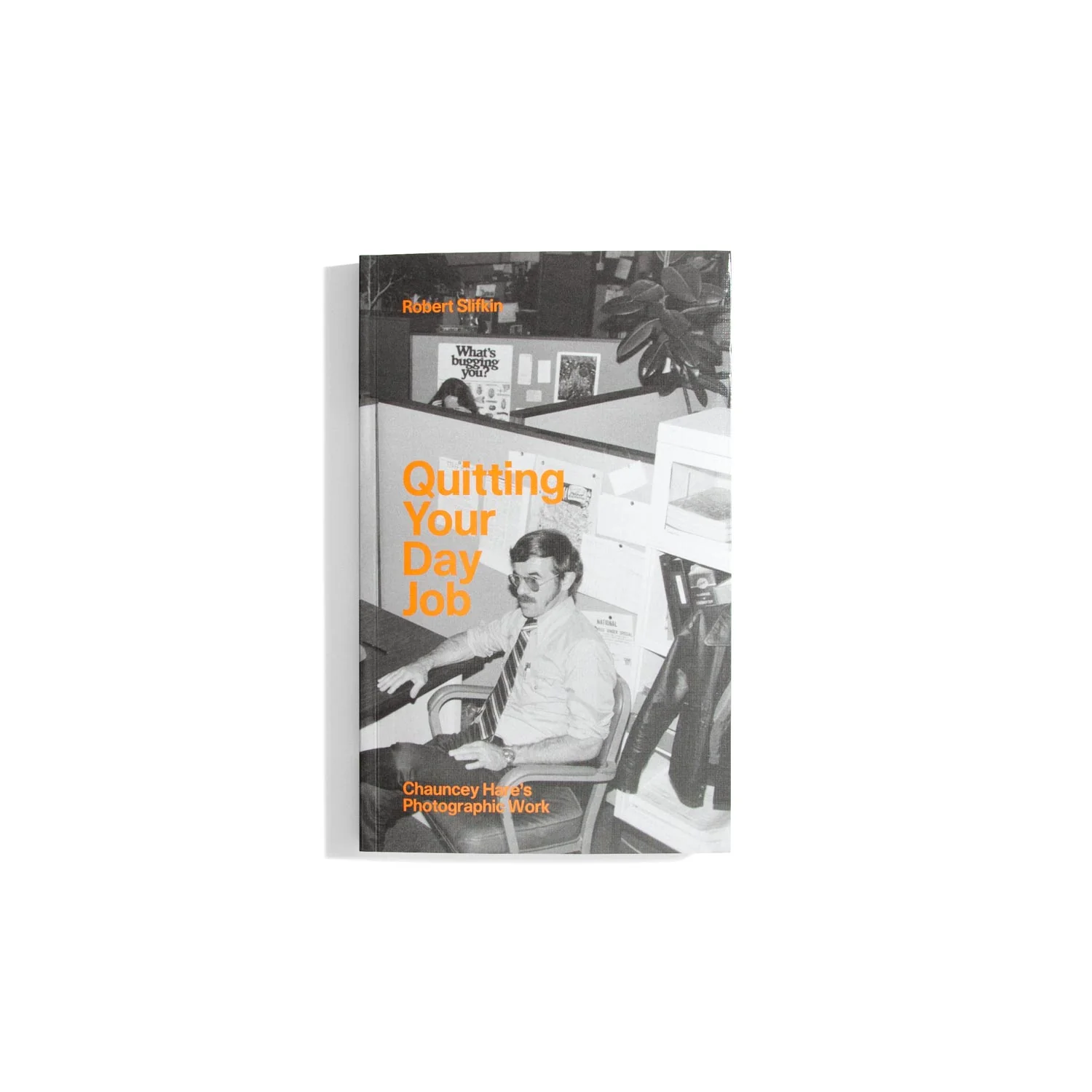
The lack of recognition of Chauncey Hare’s work has maybe much to do with Hare’s fanatical aversion to the commercial realms of the art world even at the height of his professional success. Perhaps his most overt declaration of aesthetic disavowal was his ultimate decision to renounce his identity as an artist in 1985 and pursue a career as a clinical therapist specializing in ‘work abuse’. Quitting Your Day Job considers the vexed relation between art and politics that defined Hare’s career, drawing upon largely unexamined archival materials, new interviews and analyzing Hare’s brilliant and moving photographs alongside the prolix and oftentimes bathetic prefaces he wrote for the three collections of his photographs. The book presents a wide-ranging critical account of Hare’s life and art, suggesting the ways in which his work continues to resonate with contemporary concerns about the reach of corporations into everyday life, documentary photography’s longstanding complicity with the politics of liberal guilt, and art’s vexed relation to elite channels of power.
Produktinformationen
Produktinformationen
Versand & Rückgabe
Versand & Rückgabe
Description
The lack of recognition of Chauncey Hare’s work has maybe much to do with Hare’s fanatical aversion to the commercial realms of the art world even at the height of his professional success. Perhaps his most overt declaration of aesthetic disavowal was his ultimate decision to renounce his identity as an artist in 1985 and pursue a career as a clinical therapist specializing in ‘work abuse’. Quitting Your Day Job considers the vexed relation between art and politics that defined Hare’s career, drawing upon largely unexamined archival materials, new interviews and analyzing Hare’s brilliant and moving photographs alongside the prolix and oftentimes bathetic prefaces he wrote for the three collections of his photographs. The book presents a wide-ranging critical account of Hare’s life and art, suggesting the ways in which his work continues to resonate with contemporary concerns about the reach of corporations into everyday life, documentary photography’s longstanding complicity with the politics of liberal guilt, and art’s vexed relation to elite channels of power.