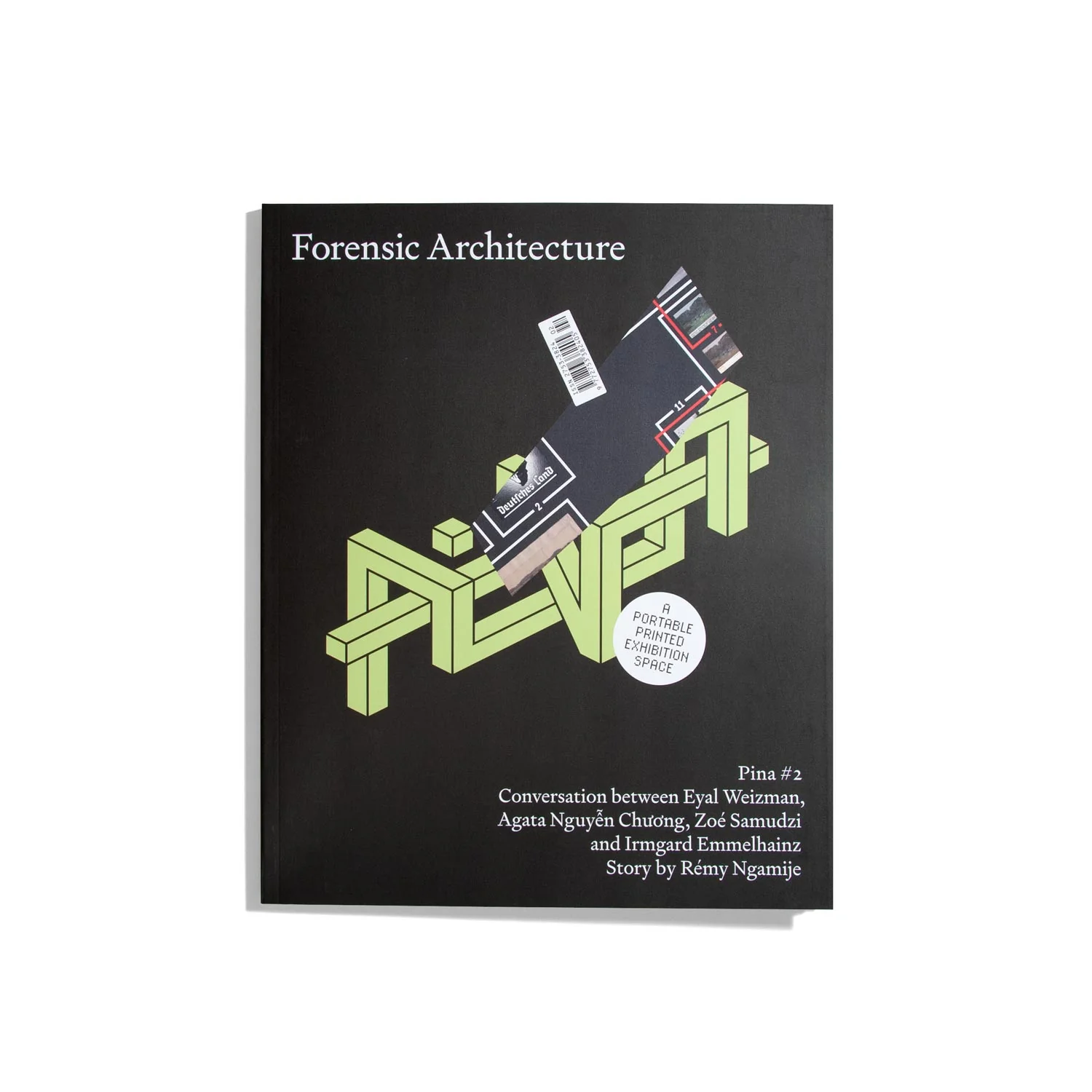
Pina #2 2025
Forensic Architecture presents ‘A Counter-Archive of the Ovaherero and Nama Genocide’, a powerful investigation into the early 20th-century genocide committed by German colonial powers in today’s Namibia. Drawing on years of archival research and spatial analysis, the exhibition traces the lasting impact of colonial violence in three parts: from the ideological roots of racialised imperialism, to the design of the concentration camp, to the ongoing environmental degradation and dispossession affecting Indigenous communities today.
In doing so, Forensic Architecture joins historians in positioning the genocidal infrastructure developed by colonial powers in ‘German Southwest Africa’ as an antecedent to the Holocaust perpetrated by the Nazis. ‘A Counter-Archive’ invites readers into an urgently relevant discussion on the broader origins of genocide within its present-day global manifestations – namely in Palestine. It also contributes to a crucial and ongoing claim for land restitution and reparations in Namibia.
It takes a non-linear approach to the archive, zooming in on specific objects and documents before zooming out to show their wider context – inviting multiple interpretations that acknowledge the complexity of how history is constructed. The project also reflects critically on its own use of colonial-era materials, asking what it means to work with them and the violence from which they originated.
These ideas are further explored in a conversation between Eyal Weizman, Agata Nguyen Chuong, Irmgard Emmelhainz and Zoé Samudzi. The exhibition is also accompanied by a new short story, ‘Breaking Even’, by Rwandan-born, Namibiabased writer Rémy Ngamije. He is the founder of Doek!, an independent organisation in Namibia supporting the literary arts. The story pauses at an intimate moment between a father and his son, meditating on the trajectory of a life as it is shaped not just by the past but more so by the indeterminacy of the future.
Original: $29.44
-65%$29.44
$10.30Produktinformationen
Produktinformationen
Versand & Rückgabe
Versand & Rückgabe
Description
Forensic Architecture presents ‘A Counter-Archive of the Ovaherero and Nama Genocide’, a powerful investigation into the early 20th-century genocide committed by German colonial powers in today’s Namibia. Drawing on years of archival research and spatial analysis, the exhibition traces the lasting impact of colonial violence in three parts: from the ideological roots of racialised imperialism, to the design of the concentration camp, to the ongoing environmental degradation and dispossession affecting Indigenous communities today.
In doing so, Forensic Architecture joins historians in positioning the genocidal infrastructure developed by colonial powers in ‘German Southwest Africa’ as an antecedent to the Holocaust perpetrated by the Nazis. ‘A Counter-Archive’ invites readers into an urgently relevant discussion on the broader origins of genocide within its present-day global manifestations – namely in Palestine. It also contributes to a crucial and ongoing claim for land restitution and reparations in Namibia.
It takes a non-linear approach to the archive, zooming in on specific objects and documents before zooming out to show their wider context – inviting multiple interpretations that acknowledge the complexity of how history is constructed. The project also reflects critically on its own use of colonial-era materials, asking what it means to work with them and the violence from which they originated.
These ideas are further explored in a conversation between Eyal Weizman, Agata Nguyen Chuong, Irmgard Emmelhainz and Zoé Samudzi. The exhibition is also accompanied by a new short story, ‘Breaking Even’, by Rwandan-born, Namibiabased writer Rémy Ngamije. He is the founder of Doek!, an independent organisation in Namibia supporting the literary arts. The story pauses at an intimate moment between a father and his son, meditating on the trajectory of a life as it is shaped not just by the past but more so by the indeterminacy of the future.