Pasolini's bodies and places
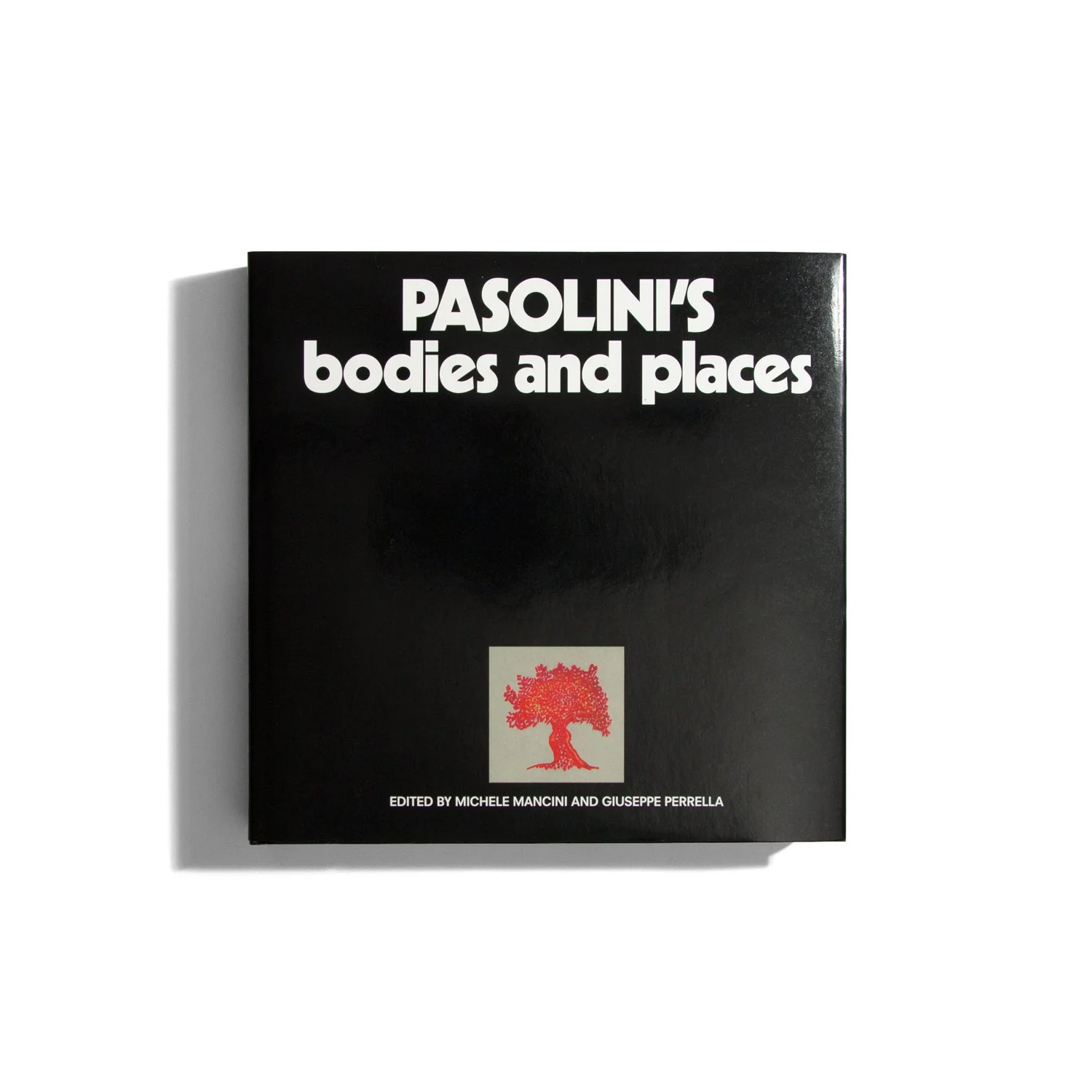
The Italian film director, writer, activist and poet Pier Paolo Pasolini had been a myth already during his lifetime. And yet, there are still many mysterious and unsolved stories about the gifted universal talent. Pasolini's bodies and places attempts to get closer to one of the most ambiguous public figures Italy ever had. With its relentless and yet playful classification of some 2,000 film stills ranged under the categories of “bodies” and “places”, the editors Mancini and Perrella stage an ever-shifting space. With a hidden reference to Walter Benjamin and a correspondingly revolutionary attitude, quotation here is understood as a form of “appropriation”, as a practical use of an archive. Around 1980 in Rome, a small cooperative around film critics Michele Mancini and Giuseppe Perrella produced a mysterious, elaborate and yet effortless looking 600-page book of black-and-white photographs entitled Pier Paolo Pasolini: Corpi e Luoghi (Theorema 1981). According to some reviews of the time this is the most Pasolinian publication to date , an indispensable tool for future research, not just an illustrated book but a unique model of critique.
Produktinformationen
Produktinformationen
Versand & Rückgabe
Versand & Rückgabe
Description
The Italian film director, writer, activist and poet Pier Paolo Pasolini had been a myth already during his lifetime. And yet, there are still many mysterious and unsolved stories about the gifted universal talent. Pasolini's bodies and places attempts to get closer to one of the most ambiguous public figures Italy ever had. With its relentless and yet playful classification of some 2,000 film stills ranged under the categories of “bodies” and “places”, the editors Mancini and Perrella stage an ever-shifting space. With a hidden reference to Walter Benjamin and a correspondingly revolutionary attitude, quotation here is understood as a form of “appropriation”, as a practical use of an archive. Around 1980 in Rome, a small cooperative around film critics Michele Mancini and Giuseppe Perrella produced a mysterious, elaborate and yet effortless looking 600-page book of black-and-white photographs entitled Pier Paolo Pasolini: Corpi e Luoghi (Theorema 1981). According to some reviews of the time this is the most Pasolinian publication to date , an indispensable tool for future research, not just an illustrated book but a unique model of critique.