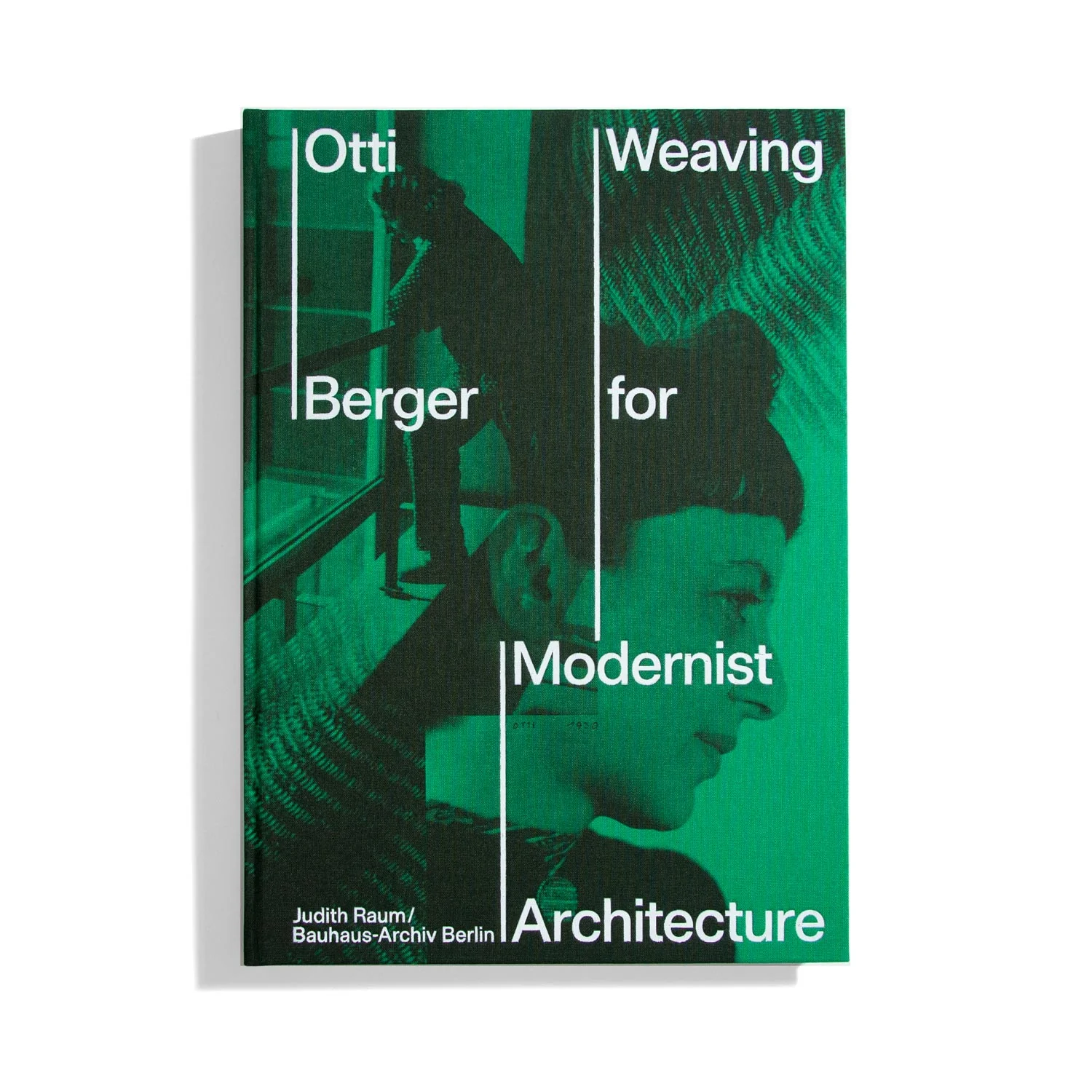
Otti Berger - Weaving for Modernist Architecture
Bauhaus-trained textile designer Otti Berger’s ouevre is an extraordinary example of a textile designer successfully complementing modernist architecture with precisely designed and industrially produced woven fabrics for the interior. In addition, Berger’s working method and professional positioning constitute an early example of highly specialized entrepreneurship in the textile sector. Yet her functional fabric designs are virtually unknown and have not yet been the object of thorough study. The publication provides the first systematic overview and detailed analysis of Berger’s textile estate, which is incoherently dispersed across international collections in North America and Europe, and makes Berger’s major texts on the textile medium and its relation with architecture available in English. At the same time, it offers a long-overdue biographical retrospective of a female Jewish entrepreneur in the 1930s whose practise was forcibly disrupted by Nazi Germany. The applied artistic research methodology and the publication’s design put the reader in the position to reconnect the dots of Berger’s design work and to make sense of its various aspects, an overview that geographical distances and conservational restrictions make impossible outside the space of the book.
Produktinformationen
Produktinformationen
Versand & Rückgabe
Versand & Rückgabe
Description
Bauhaus-trained textile designer Otti Berger’s ouevre is an extraordinary example of a textile designer successfully complementing modernist architecture with precisely designed and industrially produced woven fabrics for the interior. In addition, Berger’s working method and professional positioning constitute an early example of highly specialized entrepreneurship in the textile sector. Yet her functional fabric designs are virtually unknown and have not yet been the object of thorough study. The publication provides the first systematic overview and detailed analysis of Berger’s textile estate, which is incoherently dispersed across international collections in North America and Europe, and makes Berger’s major texts on the textile medium and its relation with architecture available in English. At the same time, it offers a long-overdue biographical retrospective of a female Jewish entrepreneur in the 1930s whose practise was forcibly disrupted by Nazi Germany. The applied artistic research methodology and the publication’s design put the reader in the position to reconnect the dots of Berger’s design work and to make sense of its various aspects, an overview that geographical distances and conservational restrictions make impossible outside the space of the book.