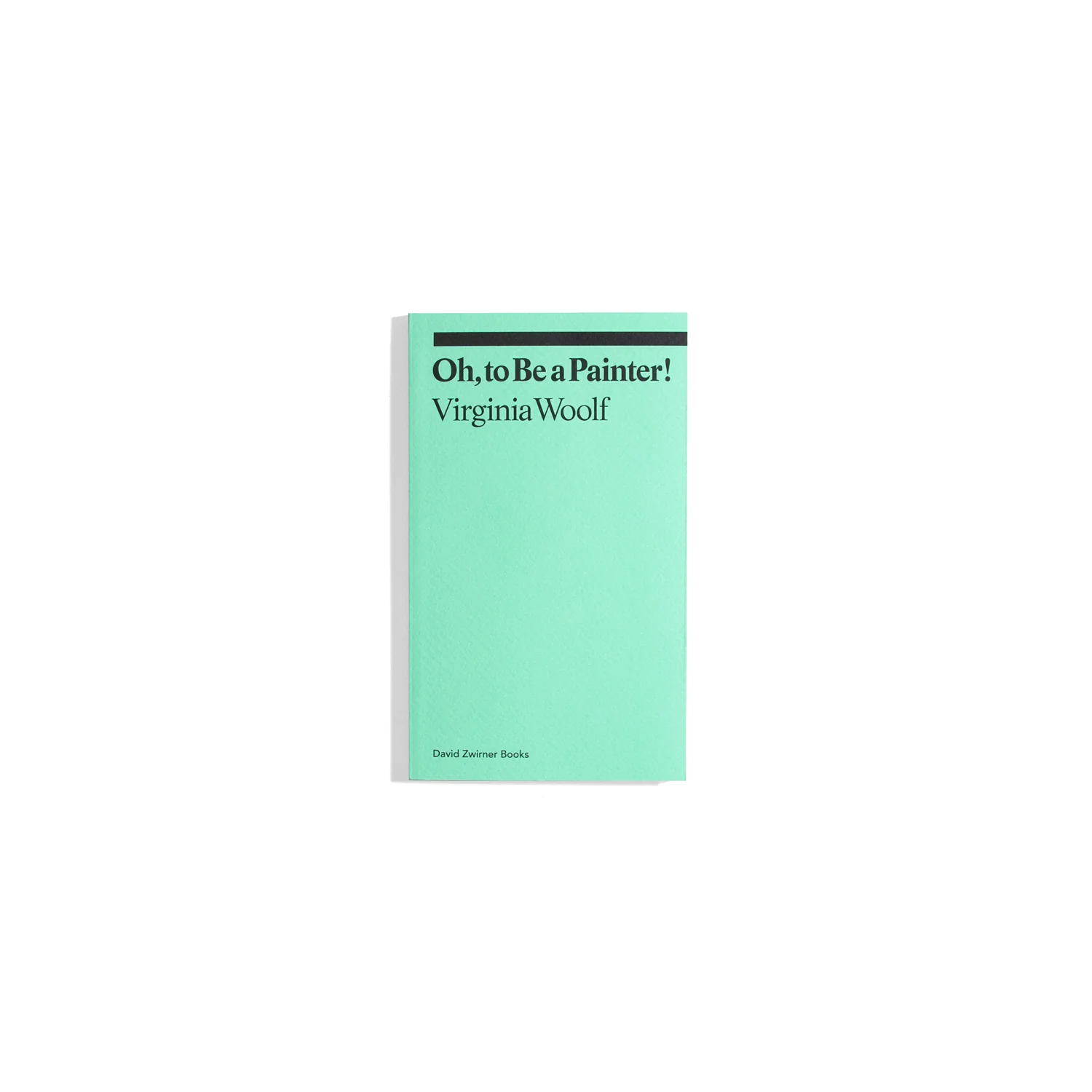
Oh, to be a Painter! - Virginia Woolf (ekphrasis series)
The twentieth volume in the renowned ekphrasis series, this collection of Virginia Woolf’s writings on the visual arts offers a whole new perspective on the revolutionary author. Despite wide interest in Woolf’s writings, and in the artists and art critics in her Bloomsbury circle, there is no accessible edition or selection of essays dedicated to her writings on art. This volume collects more her longest essay on painting, “Walter Sickert: A Conversation” (1934), alongside shorter essays and reviews, including “Pictures and Portraits” (1920) and “Pictures” (1925). These formally inventive texts reveal the centrality of the visual arts to Woolf’s writing and vision. They show her engaging with contemporary debates about modern art and are innovative in their treatment of ideas about color and form, including in response to the work of her sister, the painter Vanessa Bell, who designed many of her book covers and jackets. In these essays and reviews, Woolf illuminates the complex and interdependent relationship between the artist and society, and reveals her own shifting perspectives during decades of social and political change. She also provides sharp and astute commentary on specific works of art and on the relationship between art and writing.
Produktinformationen
Produktinformationen
Versand & Rückgabe
Versand & Rückgabe
Description
The twentieth volume in the renowned ekphrasis series, this collection of Virginia Woolf’s writings on the visual arts offers a whole new perspective on the revolutionary author. Despite wide interest in Woolf’s writings, and in the artists and art critics in her Bloomsbury circle, there is no accessible edition or selection of essays dedicated to her writings on art. This volume collects more her longest essay on painting, “Walter Sickert: A Conversation” (1934), alongside shorter essays and reviews, including “Pictures and Portraits” (1920) and “Pictures” (1925). These formally inventive texts reveal the centrality of the visual arts to Woolf’s writing and vision. They show her engaging with contemporary debates about modern art and are innovative in their treatment of ideas about color and form, including in response to the work of her sister, the painter Vanessa Bell, who designed many of her book covers and jackets. In these essays and reviews, Woolf illuminates the complex and interdependent relationship between the artist and society, and reveals her own shifting perspectives during decades of social and political change. She also provides sharp and astute commentary on specific works of art and on the relationship between art and writing.