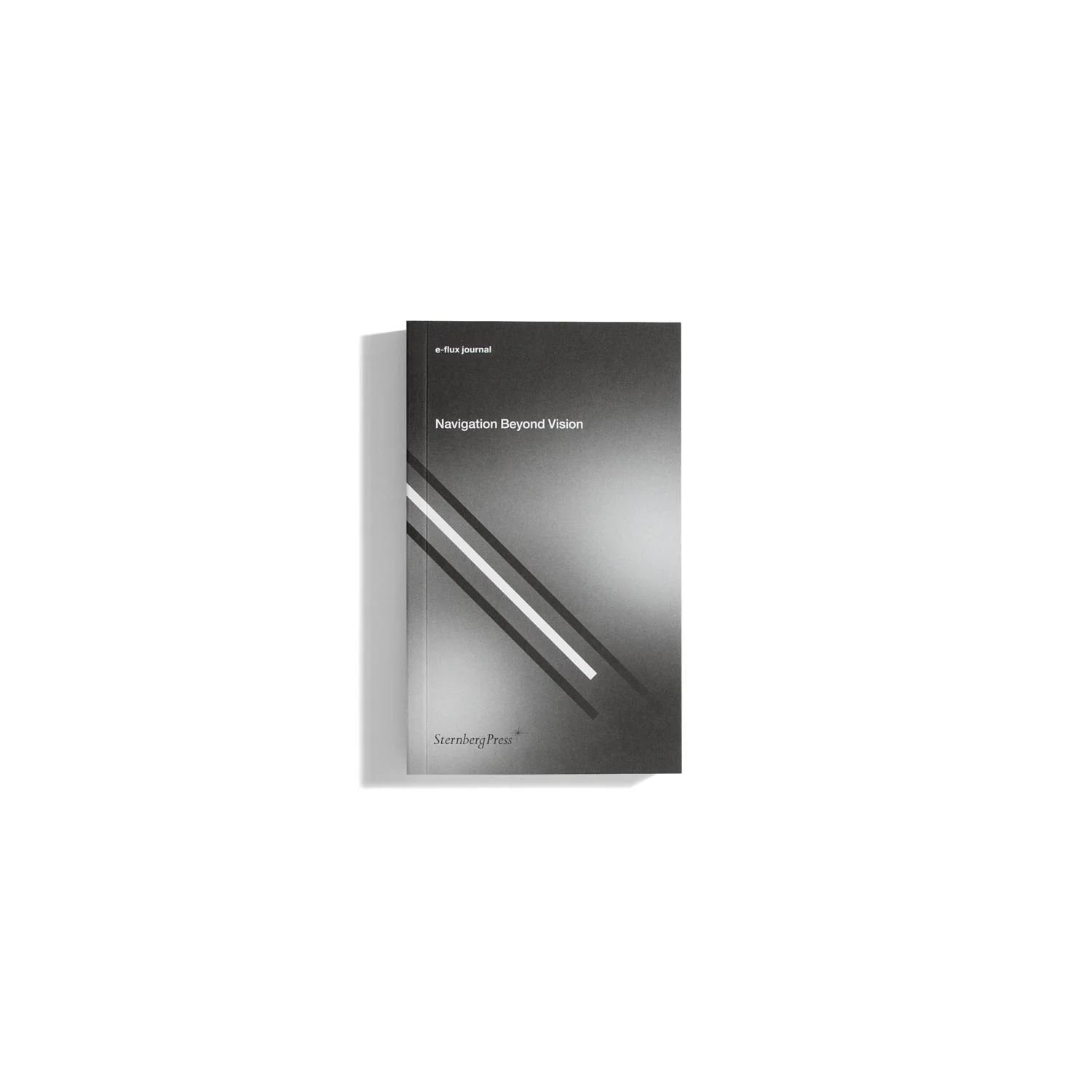
Navigation Beyond Vision (e-flux journal)
How the shift from montage to navigation alters the way images—and art—operate as models of political action and modes of political intervention. Navigation begins where the map becomes indecipherable. Navigation operates on a plane of immanence in constant motion. Instead of framing or representing the world, the art of navigation continuously updates and adjusts multiple frames from viewpoints within and beyond the world. Navigation is thus an operational practice of synthesizing various orders of magnitude. Only a few weeks prior to his untimely death in 2014, Harun Farocki briefly referred to navigation as a contemporary challenge to montage—editing distinct sections of film into a continuous sequence—as the dominant paradigm of techno-political visuality. For Farocki, the computer-animated, navigable images that constitute the twenty-first century’s “ruling class of images” call for new tools of analysis, prompting him to ask: How does the shift from montage to navigation alter the way images—and art—operate as models of political action and modes of political intervention?
Original: $23.55
-65%$23.55
$8.24Produktinformationen
Produktinformationen
Versand & Rückgabe
Versand & Rückgabe
Description
How the shift from montage to navigation alters the way images—and art—operate as models of political action and modes of political intervention. Navigation begins where the map becomes indecipherable. Navigation operates on a plane of immanence in constant motion. Instead of framing or representing the world, the art of navigation continuously updates and adjusts multiple frames from viewpoints within and beyond the world. Navigation is thus an operational practice of synthesizing various orders of magnitude. Only a few weeks prior to his untimely death in 2014, Harun Farocki briefly referred to navigation as a contemporary challenge to montage—editing distinct sections of film into a continuous sequence—as the dominant paradigm of techno-political visuality. For Farocki, the computer-animated, navigable images that constitute the twenty-first century’s “ruling class of images” call for new tools of analysis, prompting him to ask: How does the shift from montage to navigation alter the way images—and art—operate as models of political action and modes of political intervention?