Moholy-Nagy and the New Typography
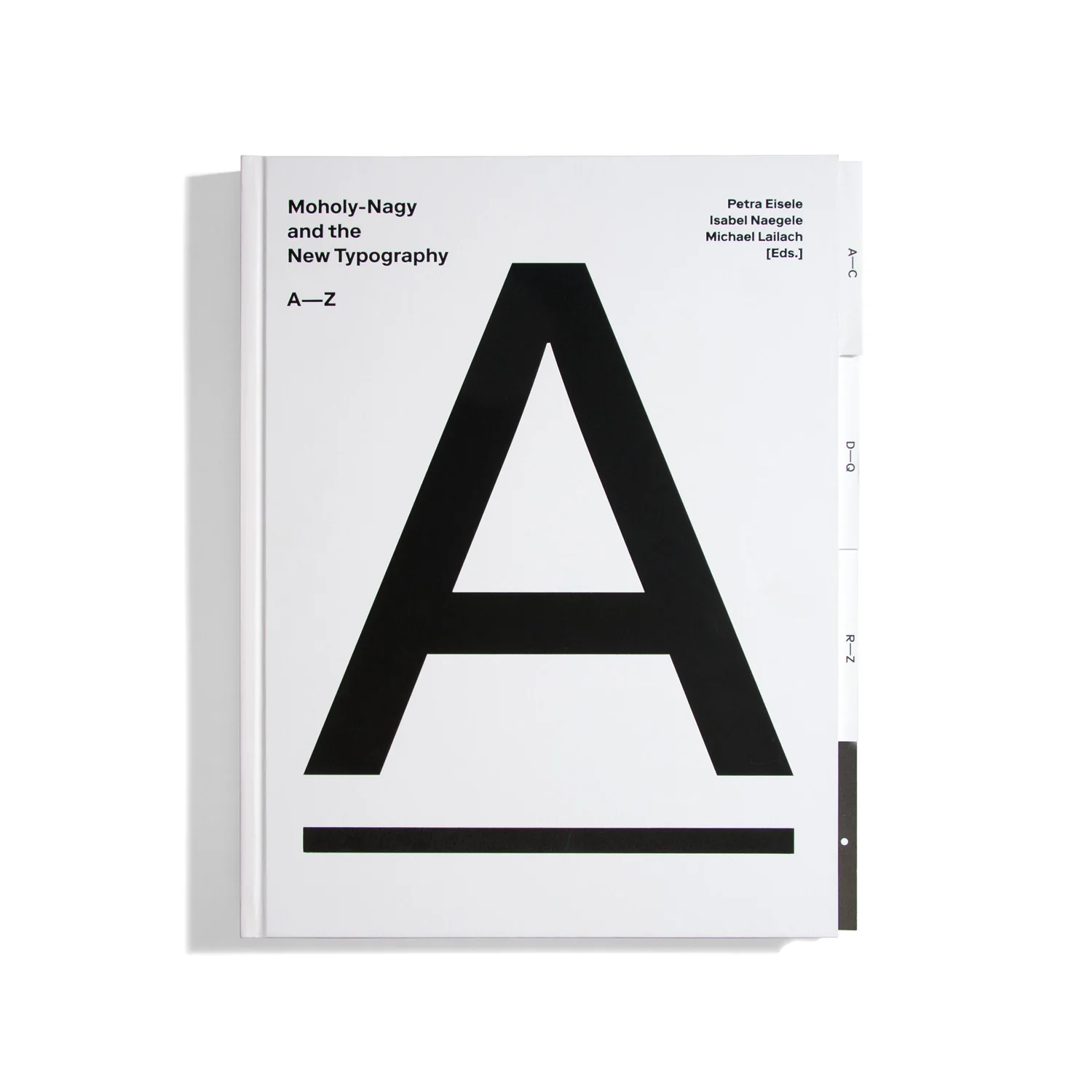
Also available in German In 1929, ten years after the Bauhaus was founded, Berlin’s Martin-Gropius-Bau launched the exhibition “New Typography.” László Moholy-Nagy, who had left Dessau the previous year and had earned a reputation as a designer in Berlin, was invited to exhibit his work together with other artists. moreThe functional graphic design, initiated by the “New Typography” movement in the 1920s, broke with tradition and established a new advertising design based on artistic criteria. more It aimed to achieve a modern look with standardized typefaces, industrial DIN norms, and adherence to such ideals as legibility, lucidity, and straightforwardness, in line with the key principles of constructivist art. For the first time, this comprehensive publication showcases Moholy-Nagy’s wall charts which have recently been rediscovered in Berlin’s Kunstbibliothek. Renowned authors provide insights into this treasure trove by each contributing to this alphabetized compilation starting with “A” for “Asymmetry” and ending with “Z” for “Zukunftsvision” (“vision of the future”). By perusing through the pages and allowing a free flow of association, the typographical world of ideas of the 1920s avant-garde is once again brought back to life.
Produktinformationen
Produktinformationen
Versand & Rückgabe
Versand & Rückgabe
Description
Also available in German In 1929, ten years after the Bauhaus was founded, Berlin’s Martin-Gropius-Bau launched the exhibition “New Typography.” László Moholy-Nagy, who had left Dessau the previous year and had earned a reputation as a designer in Berlin, was invited to exhibit his work together with other artists. moreThe functional graphic design, initiated by the “New Typography” movement in the 1920s, broke with tradition and established a new advertising design based on artistic criteria. more It aimed to achieve a modern look with standardized typefaces, industrial DIN norms, and adherence to such ideals as legibility, lucidity, and straightforwardness, in line with the key principles of constructivist art. For the first time, this comprehensive publication showcases Moholy-Nagy’s wall charts which have recently been rediscovered in Berlin’s Kunstbibliothek. Renowned authors provide insights into this treasure trove by each contributing to this alphabetized compilation starting with “A” for “Asymmetry” and ending with “Z” for “Zukunftsvision” (“vision of the future”). By perusing through the pages and allowing a free flow of association, the typographical world of ideas of the 1920s avant-garde is once again brought back to life.