Forensic Architecture Reports #1
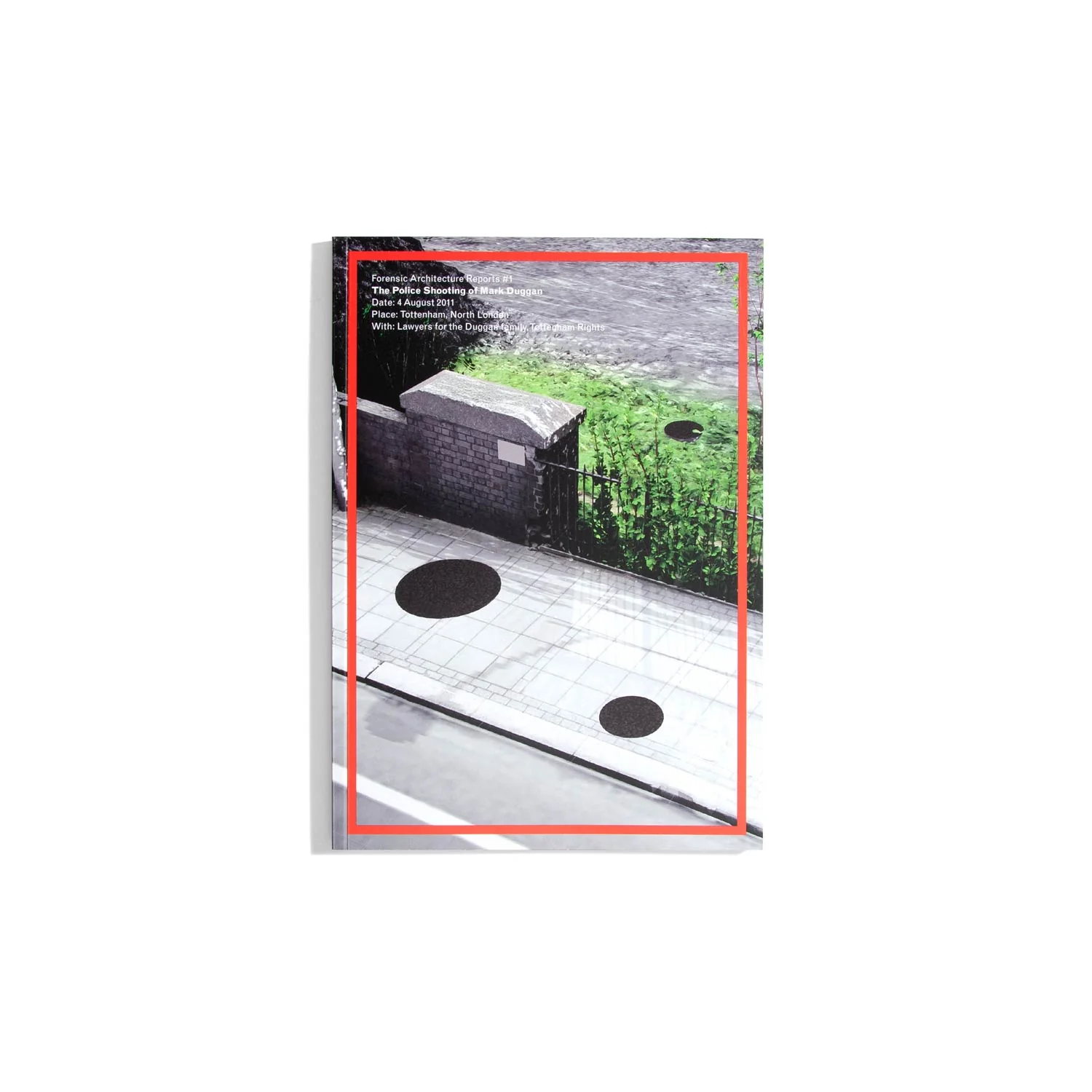
This is the first installation of Forensic Architecture Reports, a series of books each dedicated to a single FA investigation, with insights into the agency’s research methodologies, additional texts from and interviews with collaborators, and dossiers of documents that shaped the investigation in question. On the evening of 4 August 2011, Mark Duggan was shot and killed by the police more in the north London neighbourhood of Tottenham after the minicab in which he was traveling was pulled over by a team of undercover officers. The team had begun following Duggan shortly after receiving intelligence that he was in possession of a gun, and the officer who shot him testified that he had seen, for a ‘split second’, Duggan aiming the gun at him after he had exited the minicab. However, the gun was not found next to Duggan’s body on the pavement. According to the police, they discovered it in a patch of grass some seven meters away. After a coroner’s inquest ruled Duggan’s killing ‘lawful’ and the police watchdog organisation issued a report siding with the officers’ version of events, the Duggan family’s legal team commissioned Forensic Architecture to conduct an investigation into the critical question at the heart of the case: How did the gun end up in the grass? With no video footage of the shooting itself, Forensic Architecture had to rely primarily on the written and oral testimony of the officers involved to develop a spatial investigation designed to test the plausibility of the police’s narrative and to examine whether the officers themselves could have planted the gun.
Original: $15.31
-65%$15.31
$5.36Produktinformationen
Produktinformationen
Versand & Rückgabe
Versand & Rückgabe
Description
This is the first installation of Forensic Architecture Reports, a series of books each dedicated to a single FA investigation, with insights into the agency’s research methodologies, additional texts from and interviews with collaborators, and dossiers of documents that shaped the investigation in question. On the evening of 4 August 2011, Mark Duggan was shot and killed by the police more in the north London neighbourhood of Tottenham after the minicab in which he was traveling was pulled over by a team of undercover officers. The team had begun following Duggan shortly after receiving intelligence that he was in possession of a gun, and the officer who shot him testified that he had seen, for a ‘split second’, Duggan aiming the gun at him after he had exited the minicab. However, the gun was not found next to Duggan’s body on the pavement. According to the police, they discovered it in a patch of grass some seven meters away. After a coroner’s inquest ruled Duggan’s killing ‘lawful’ and the police watchdog organisation issued a report siding with the officers’ version of events, the Duggan family’s legal team commissioned Forensic Architecture to conduct an investigation into the critical question at the heart of the case: How did the gun end up in the grass? With no video footage of the shooting itself, Forensic Architecture had to rely primarily on the written and oral testimony of the officers involved to develop a spatial investigation designed to test the plausibility of the police’s narrative and to examine whether the officers themselves could have planted the gun.