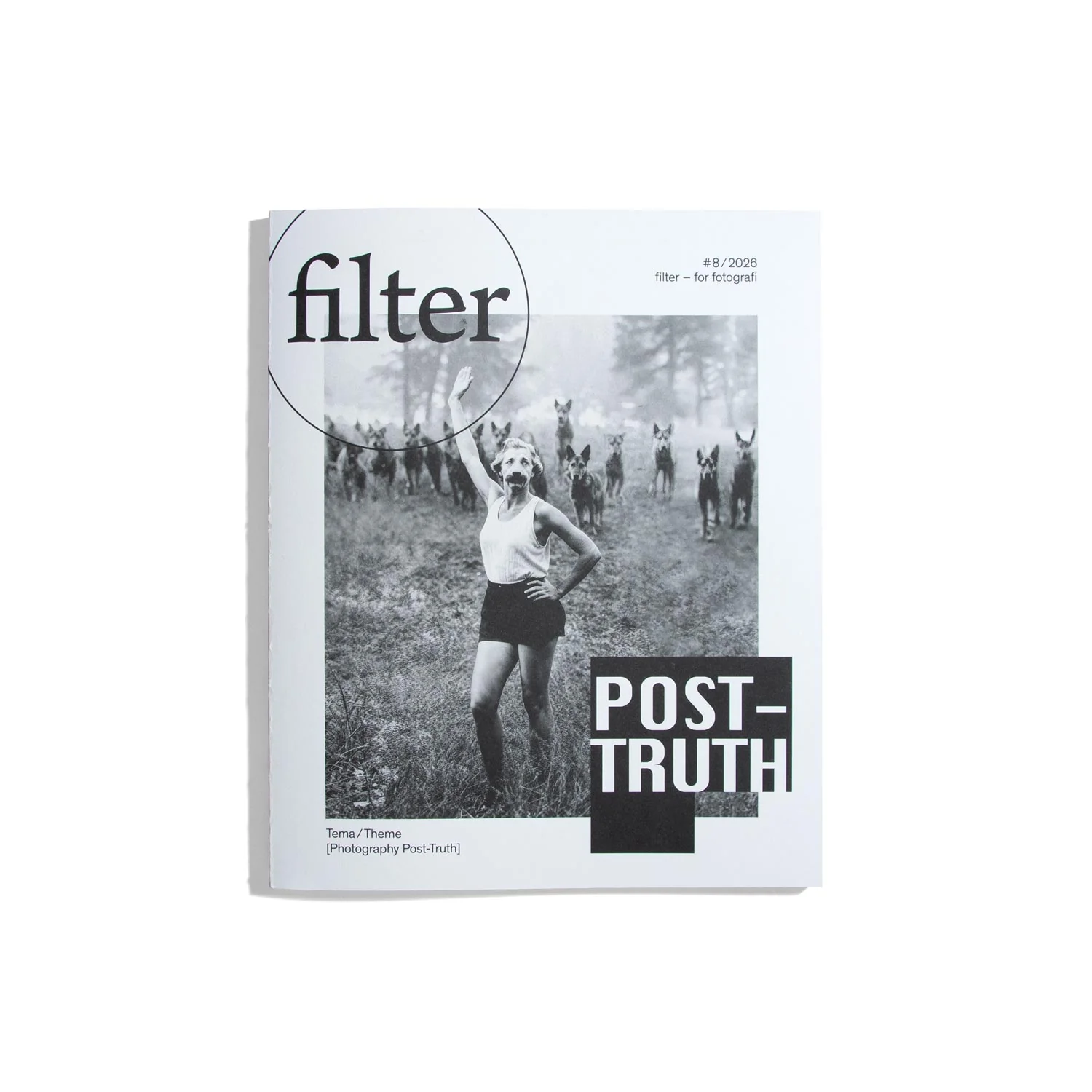
FILTER #8: Photography Post-Truth
focuses on the political and media upheavals since 2016, when ‘post-truth’ was named word of the year by Oxford Dictionaries. The rapid spread of fake news, the rise of conspiracy-ideological content on social media – especially during and after the COVID-19 pandemic – and the propagandistic use of press and war photography in current conflicts, mark a profound shift in the way we relate to photographic images. At the same time, with the proliferation of photorealistic AI-generated images, whose creation is completely detached from the notion that photography depicts ‘what has been’, photography finds itself in the midst of a paradigm shift so powerful that neither users, developers or politicians can keep up, with the result that both legislation and ethical guidelines in the field are lagging behind.
-
Lewis Bush (UK), lecturer in photojournalism and documentary photography, on the growing mistrust of photojournalism and strategies for strengthening the credibility of photography at a time when its authenticity is being questioned.
-
photo historian Rolf Sachsse (DE) on the Nazis' use of photography as a propaganda tool.
- artist and PhD fellow at the Hasselblad Foundation Kerstin Hamilton (SE) on how scientific photographs and technology shape our understanding of the world.
- art historian Oscar Vindel Schönström (DK) on the history of the Copenhagen art gallery Fotografisk Center and developments in documentary and artistic photography since the 1990s.
The texts are supplemented by portfolio contributions by international acclaimed artists Tina Enghoff (DK), Joan Fontcuberta (ES), Andreas Koch (DE), Lewis Koch (US), Astrid Kruse Jensen (DK), Andréas Lang (DE), and Laura Rautjoki (FI).
Produktinformationen
Produktinformationen
Versand & Rückgabe
Versand & Rückgabe
Description
focuses on the political and media upheavals since 2016, when ‘post-truth’ was named word of the year by Oxford Dictionaries. The rapid spread of fake news, the rise of conspiracy-ideological content on social media – especially during and after the COVID-19 pandemic – and the propagandistic use of press and war photography in current conflicts, mark a profound shift in the way we relate to photographic images. At the same time, with the proliferation of photorealistic AI-generated images, whose creation is completely detached from the notion that photography depicts ‘what has been’, photography finds itself in the midst of a paradigm shift so powerful that neither users, developers or politicians can keep up, with the result that both legislation and ethical guidelines in the field are lagging behind.
-
Lewis Bush (UK), lecturer in photojournalism and documentary photography, on the growing mistrust of photojournalism and strategies for strengthening the credibility of photography at a time when its authenticity is being questioned.
-
photo historian Rolf Sachsse (DE) on the Nazis' use of photography as a propaganda tool.
- artist and PhD fellow at the Hasselblad Foundation Kerstin Hamilton (SE) on how scientific photographs and technology shape our understanding of the world.
- art historian Oscar Vindel Schönström (DK) on the history of the Copenhagen art gallery Fotografisk Center and developments in documentary and artistic photography since the 1990s.
The texts are supplemented by portfolio contributions by international acclaimed artists Tina Enghoff (DK), Joan Fontcuberta (ES), Andreas Koch (DE), Lewis Koch (US), Astrid Kruse Jensen (DK), Andréas Lang (DE), and Laura Rautjoki (FI).