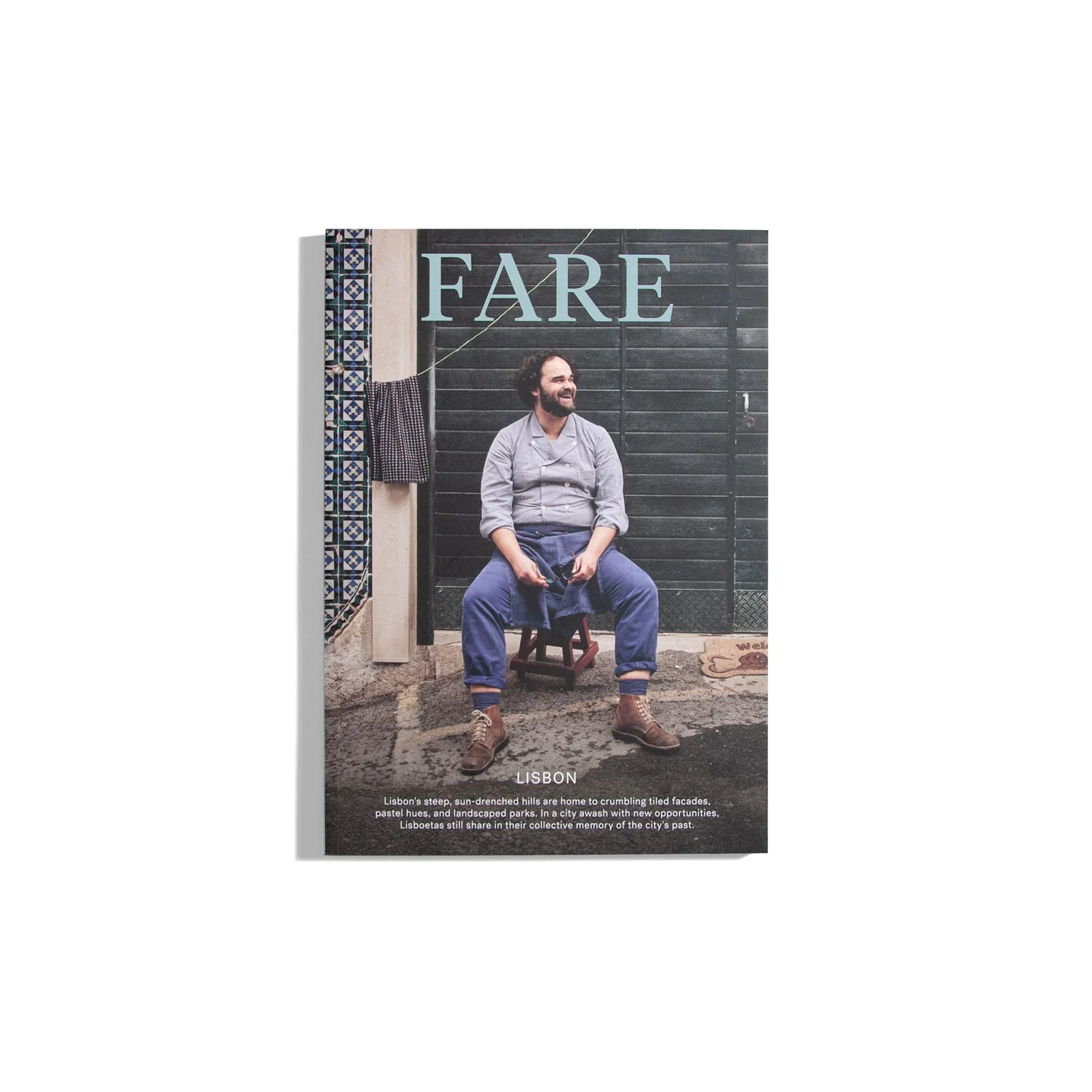
Fare #11 Lisbon
Lisbon’s charm is undeniable—the slow pace, patterned sidewalks, trams that rumble up and down the sunny hillsides. Beyond lies a deep and soulful history that ties its inhabitants to the city’s past.
Here, we meet locals like Joana Astolfi, a designer who scours the city for objects and inspiration; architect-turned-chef Leopoldo Calhau, whose restaurant is an homage to the classic tabernas of Alentejo; and Rita Múrias and Paulo Barata, who have dedicated their lives to rescuing and restoring the city’s neon signs and memories of its glamorous days gone by. We trace the roots of Lisbon’s culture and cuisine back to its former colonies, communities which continue to feed the belly of the city with dishes like Cape Verdean cachupa, Angolan moamba; grogue distilled in hidden sugarcane fields, and the ubiquitous, spicy piri piri sauce. From the tiny fado houses in the Alfama district to the convents where Lisbon’s pastries were born; from the ginjinha bars to the family-owned neighbourhood tascas, we scoured the city for the stories closest to its heart. In this issue—the first city we’ve travelled to in-person since the pandemic—we piece together the collective memory of the Lisboetas who know the city best, to paint a modern picture of the Portuguese capital.
Original: $23.55
-65%$23.55
$8.24Produktinformationen
Produktinformationen
Versand & Rückgabe
Versand & Rückgabe
Description
Lisbon’s charm is undeniable—the slow pace, patterned sidewalks, trams that rumble up and down the sunny hillsides. Beyond lies a deep and soulful history that ties its inhabitants to the city’s past.
Here, we meet locals like Joana Astolfi, a designer who scours the city for objects and inspiration; architect-turned-chef Leopoldo Calhau, whose restaurant is an homage to the classic tabernas of Alentejo; and Rita Múrias and Paulo Barata, who have dedicated their lives to rescuing and restoring the city’s neon signs and memories of its glamorous days gone by. We trace the roots of Lisbon’s culture and cuisine back to its former colonies, communities which continue to feed the belly of the city with dishes like Cape Verdean cachupa, Angolan moamba; grogue distilled in hidden sugarcane fields, and the ubiquitous, spicy piri piri sauce. From the tiny fado houses in the Alfama district to the convents where Lisbon’s pastries were born; from the ginjinha bars to the family-owned neighbourhood tascas, we scoured the city for the stories closest to its heart. In this issue—the first city we’ve travelled to in-person since the pandemic—we piece together the collective memory of the Lisboetas who know the city best, to paint a modern picture of the Portuguese capital.