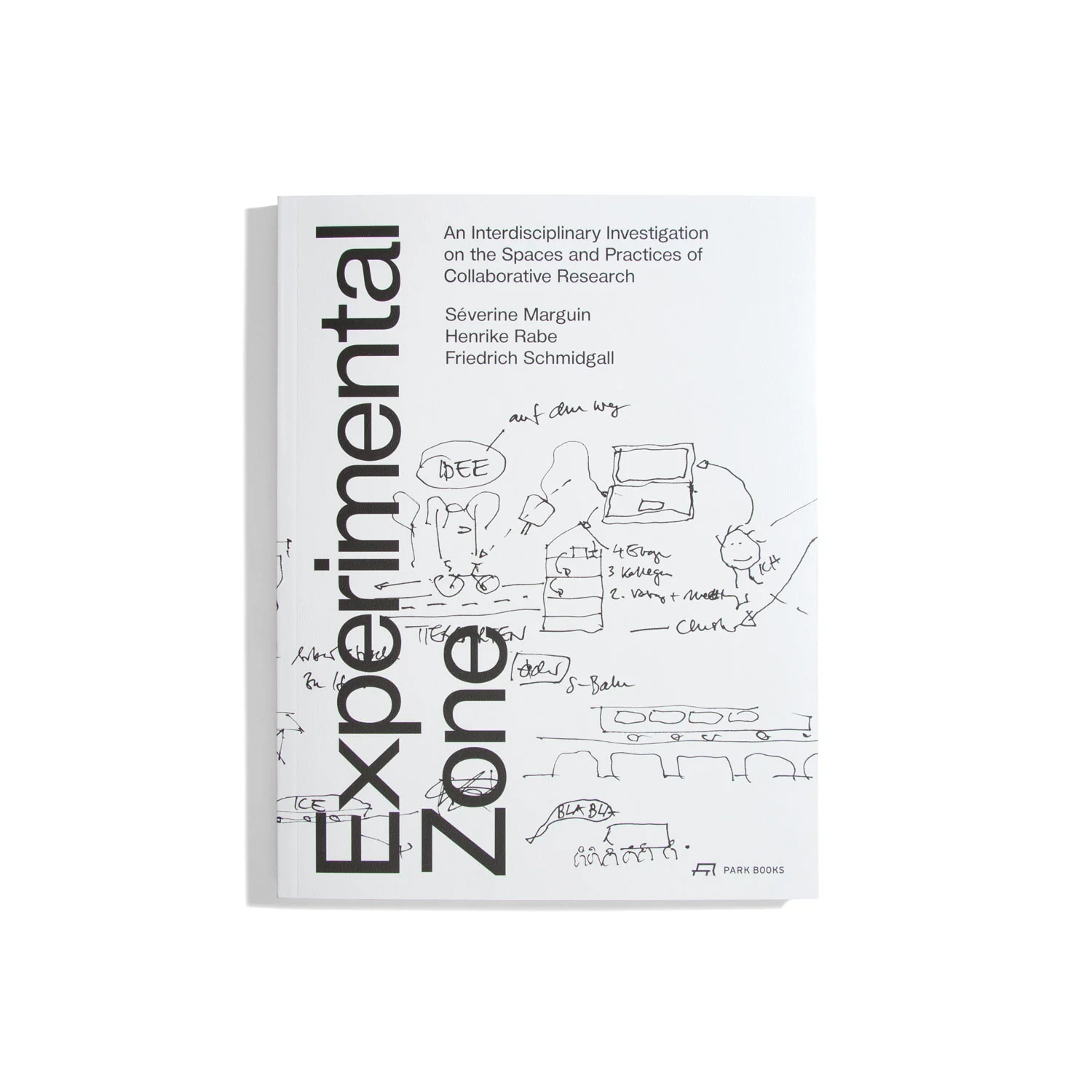
Experimental Zone
Experimental Zone documents a remarkable experiment in spatial research at the interdisciplinary laboratory Image Knowledge Gestaltung at Berlin’s Humboldt University. Every two months, for four years, researchers reconfigured a 350–square meter workspace for forty scientists. moreThe design-based collaborative experiment’s focus was on the interrelation of space and knowledge production: What spatial qualities are required by interdisciplinary teams for their research work? With some 180 striking and straightforward images and graphics, Experimental Zone presents the findings of the experiment. It highlights the spatial conditions under which individual and collaborative research unfold, overlap, or merge and reveals the characteristics of an architecture that fosters interdisciplinary. The experiment’s innovative interdisciplinarity approach is also reflected in the book’s design, with each of the five chapters and the comprehensive visual material reflecting publishing traditions in design, architecture, and the humanities.
Original: $44.75
-65%$44.75
$15.66Produktinformationen
Produktinformationen
Versand & Rückgabe
Versand & Rückgabe
Description
Experimental Zone documents a remarkable experiment in spatial research at the interdisciplinary laboratory Image Knowledge Gestaltung at Berlin’s Humboldt University. Every two months, for four years, researchers reconfigured a 350–square meter workspace for forty scientists. moreThe design-based collaborative experiment’s focus was on the interrelation of space and knowledge production: What spatial qualities are required by interdisciplinary teams for their research work? With some 180 striking and straightforward images and graphics, Experimental Zone presents the findings of the experiment. It highlights the spatial conditions under which individual and collaborative research unfold, overlap, or merge and reveals the characteristics of an architecture that fosters interdisciplinary. The experiment’s innovative interdisciplinarity approach is also reflected in the book’s design, with each of the five chapters and the comprehensive visual material reflecting publishing traditions in design, architecture, and the humanities.