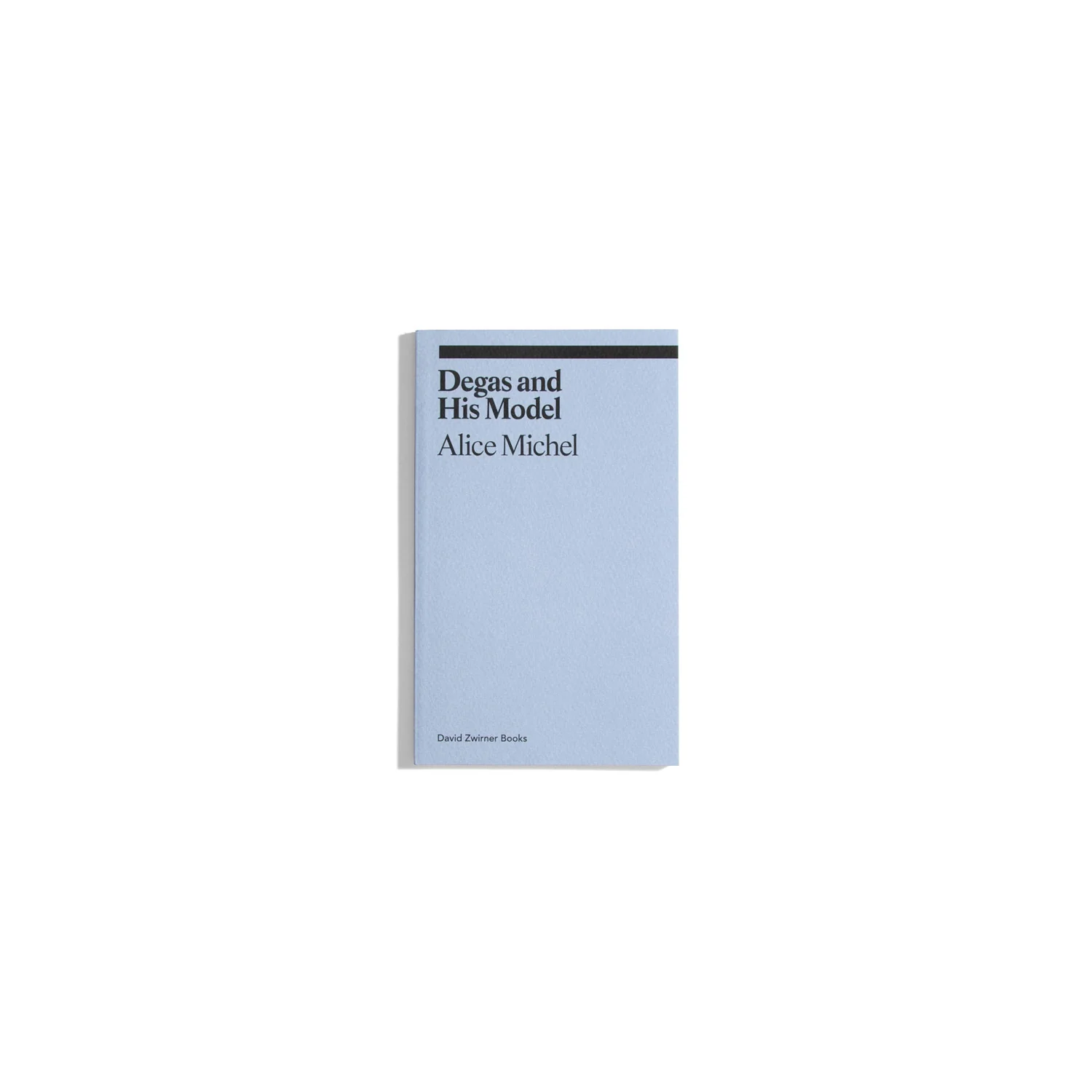
Degas and His Model - Alice Model (ekphrasis series)
There are many myths about the artist Edgar Degas—from Degas the misanthrope to Degas the deviant, to Degas the obsessive. But there is no single text that better stokes the fire than Degas and His Model, a short memoir published by Alice Michel, who purportedly modeled for Degas.moreNever before translated into English, the text’s original publication in Mercure de France in 1919, shortly after the artist’s death, has been treated as an important account of the master sculptor at work. We know that Alice was writing under a pseudonym, but who the real person behind this account was remains a mystery—to this day nothing is known about her. Yet, the descriptions seem too accurate to be ignored, the anecdotes too spot-on to discount; even the dialogue captures the artist’s tone and mannerisms. What is found in these pages is at times a woman’s flirtatious recollection of a bizarre “artistic type” and at others a moving attempt to connect with a great, often tragic man. The descriptions are limpid, unburdened; the dialogue is lively and intimate, not unlike reading the very best kind of gossip, with world-historical significance. Here in these dusty studios, Degas is alive, running hands over clay, complaining about his eyes, denigrating the other artists around him, and whispering salaciously to his model. And during his mood swings, we see reflected the model’s innocence and confusion, her pain at being misunderstood and finally rejected. It is an intimate portrait of a moment in a great artist’s life, a sort of Bildungsroman in which his model (whoever she may be) does not emerge unscathed.
Produktinformationen
Produktinformationen
Versand & Rückgabe
Versand & Rückgabe
Description
There are many myths about the artist Edgar Degas—from Degas the misanthrope to Degas the deviant, to Degas the obsessive. But there is no single text that better stokes the fire than Degas and His Model, a short memoir published by Alice Michel, who purportedly modeled for Degas.moreNever before translated into English, the text’s original publication in Mercure de France in 1919, shortly after the artist’s death, has been treated as an important account of the master sculptor at work. We know that Alice was writing under a pseudonym, but who the real person behind this account was remains a mystery—to this day nothing is known about her. Yet, the descriptions seem too accurate to be ignored, the anecdotes too spot-on to discount; even the dialogue captures the artist’s tone and mannerisms. What is found in these pages is at times a woman’s flirtatious recollection of a bizarre “artistic type” and at others a moving attempt to connect with a great, often tragic man. The descriptions are limpid, unburdened; the dialogue is lively and intimate, not unlike reading the very best kind of gossip, with world-historical significance. Here in these dusty studios, Degas is alive, running hands over clay, complaining about his eyes, denigrating the other artists around him, and whispering salaciously to his model. And during his mood swings, we see reflected the model’s innocence and confusion, her pain at being misunderstood and finally rejected. It is an intimate portrait of a moment in a great artist’s life, a sort of Bildungsroman in which his model (whoever she may be) does not emerge unscathed.