"ca. 1972" - Tom Holert
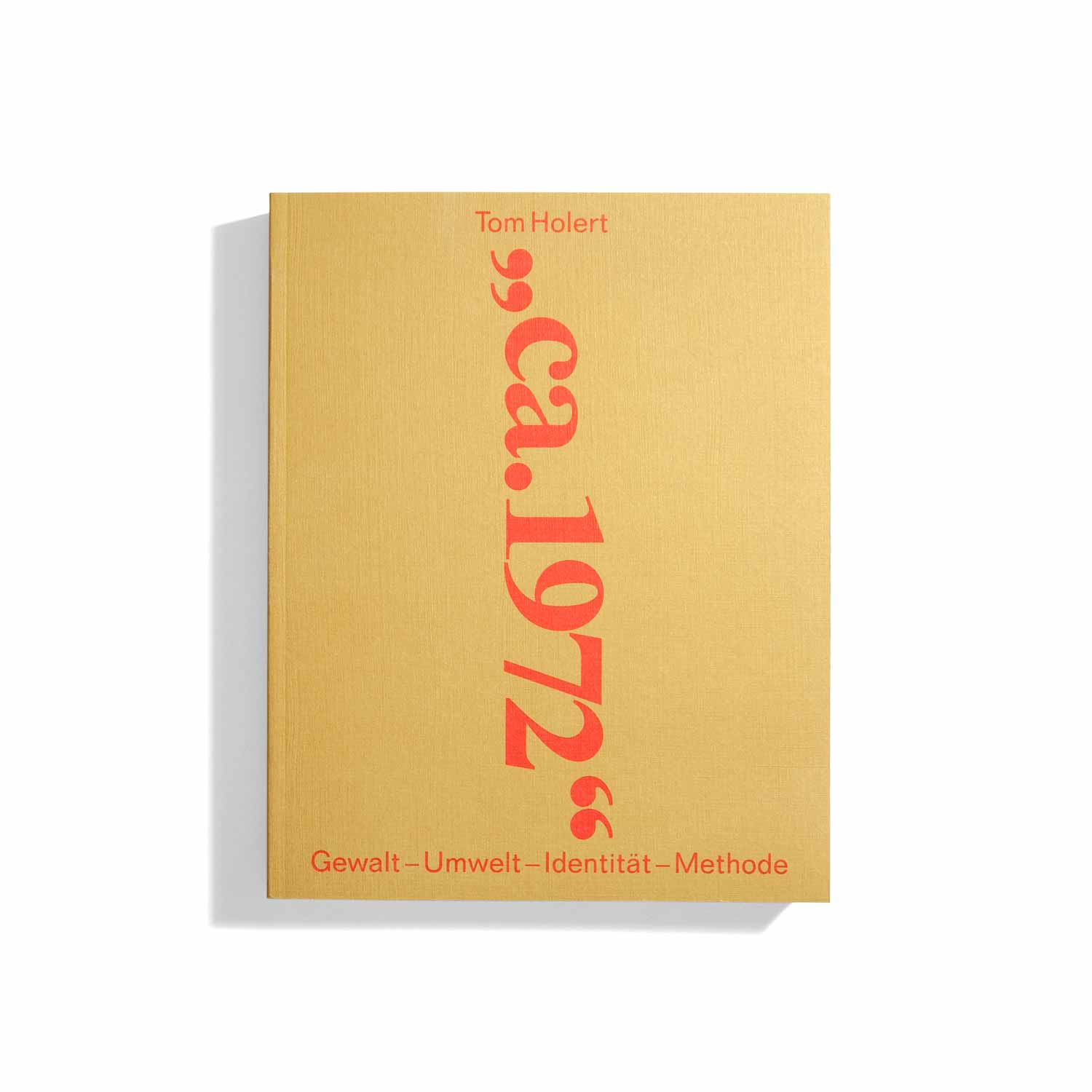
Not another annual monograph. No grand theses about caesura and new beginnings. No attempt to approach the present by way of a selected past. Instead: Digressions, drifting and excursions on the fringes of history. Understood in this way, “ca. 1972” is the name of a chronotopos in the shadow of the political processes and cultural upheavals of the long 1960s. Decolonization, the black civil rights movement, May 1968, the sexual revolution and other emancipatory projects seemed to have failed “ca. 1972” because of their contradictions. But is that the whole truth? As exhausted as the technocratic ideology of progress and the radical euphoria of post-war modernity may have seemed, some contemporaries experienced a present in which they could once again “connect everything”. In order to do justice to the complexities of this constellation of exhaustion and emphasis, this book refrains from completeness or balance. Images and people, texts and sounds point the way through a nervous space-time constellation. But they do not support the illusion of any orientation. And that is already one of the components of the “method” called “ca. 1972”.
Original: $42.39
-65%$42.39
$14.84Produktinformationen
Produktinformationen
Versand & Rückgabe
Versand & Rückgabe
Description
Not another annual monograph. No grand theses about caesura and new beginnings. No attempt to approach the present by way of a selected past. Instead: Digressions, drifting and excursions on the fringes of history. Understood in this way, “ca. 1972” is the name of a chronotopos in the shadow of the political processes and cultural upheavals of the long 1960s. Decolonization, the black civil rights movement, May 1968, the sexual revolution and other emancipatory projects seemed to have failed “ca. 1972” because of their contradictions. But is that the whole truth? As exhausted as the technocratic ideology of progress and the radical euphoria of post-war modernity may have seemed, some contemporaries experienced a present in which they could once again “connect everything”. In order to do justice to the complexities of this constellation of exhaustion and emphasis, this book refrains from completeness or balance. Images and people, texts and sounds point the way through a nervous space-time constellation. But they do not support the illusion of any orientation. And that is already one of the components of the “method” called “ca. 1972”.