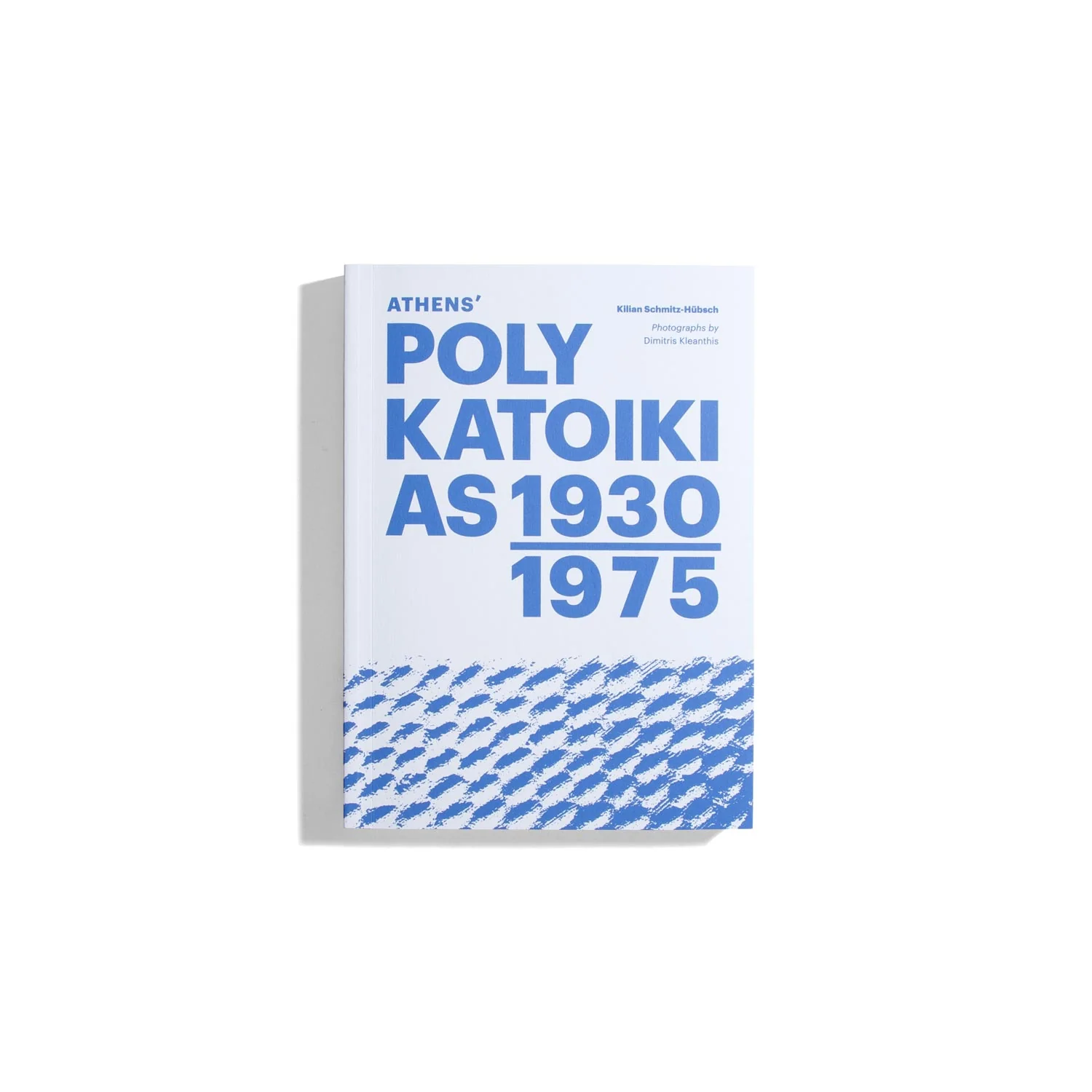
Athens Polykatoikias 1930-1975
Today's Athens is characterised by a type of building that transformed the Greek capital into a modern metropolis within a few decades in the 20th century: the polykatoikia, a small-scale urban apartment block. For almost forty years the undisputed residential ideal of all social classes, by the end of the century the polykatoikia had become synonymous with the hasty mass production of the post-war period and the inhospitable living conditions in the city centre. Today, the question arises as to the potential and further development of this ubiquitous building type.
The book sets out to trace the architectural origins of this typology. For the first time, it comprehensively examines the architectural concepts developed by Greek architects for the polykatoikia type. Seventy-six innovative apartment buildings from the period 1930 to 1975 are presented with current photographs, newly drawn floor plans and short explanatory texts. The selection reveals an astonishing range of concepts, including designs by Dimitris Pikionis, Aris Konstantinidis, Constantine Doxiadis and George Candilis. The chronological order traces the evolution of the typology, from the Modern Movement polykatoikias of the 1930s to the experiments of the early post-war period and the iconic polykatoikias of the 1960s. Additional texts explore the development of key architectural features of the polykatoikia type and reflect on architects' ongoing struggles with this residential model.
Original: $44.75
-65%$44.75
$15.66Produktinformationen
Produktinformationen
Versand & Rückgabe
Versand & Rückgabe
Description
Today's Athens is characterised by a type of building that transformed the Greek capital into a modern metropolis within a few decades in the 20th century: the polykatoikia, a small-scale urban apartment block. For almost forty years the undisputed residential ideal of all social classes, by the end of the century the polykatoikia had become synonymous with the hasty mass production of the post-war period and the inhospitable living conditions in the city centre. Today, the question arises as to the potential and further development of this ubiquitous building type.
The book sets out to trace the architectural origins of this typology. For the first time, it comprehensively examines the architectural concepts developed by Greek architects for the polykatoikia type. Seventy-six innovative apartment buildings from the period 1930 to 1975 are presented with current photographs, newly drawn floor plans and short explanatory texts. The selection reveals an astonishing range of concepts, including designs by Dimitris Pikionis, Aris Konstantinidis, Constantine Doxiadis and George Candilis. The chronological order traces the evolution of the typology, from the Modern Movement polykatoikias of the 1930s to the experiments of the early post-war period and the iconic polykatoikias of the 1960s. Additional texts explore the development of key architectural features of the polykatoikia type and reflect on architects' ongoing struggles with this residential model.