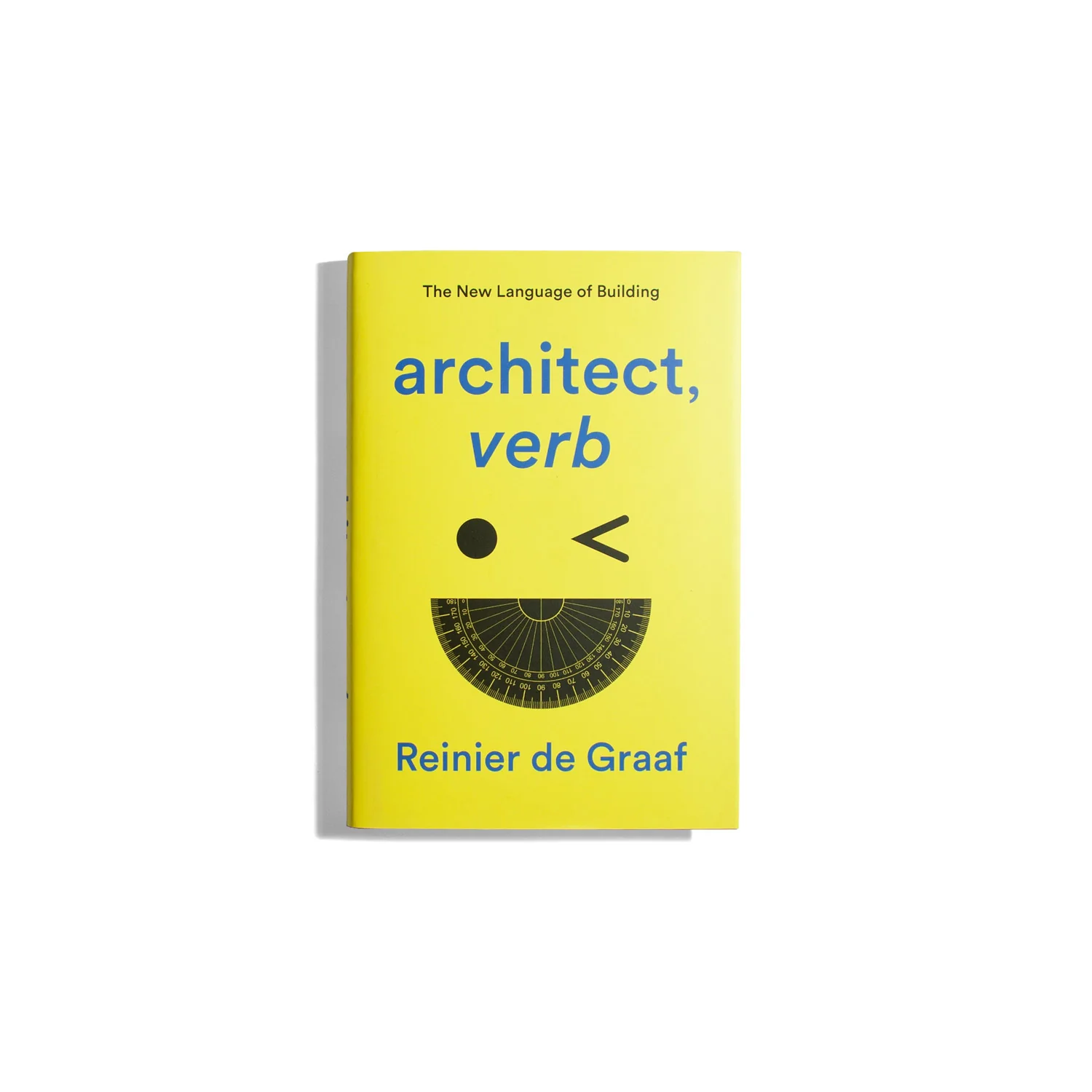
Architect, Verb - Reinier de Graaf
How to build world-class, award winning, creative, innovative, sustainable, liveable and beautiful spaces that foster a sense of place and well being. Be it sci-fi megastructures in the Middle East or historicist towns in the UK, new projects are invariably marketed with the same buzzwords: “world-class”, “award-winning”, “creative”, “innovative”, “sustainable”, “livable”, “beautiful” or fostering “a sense of place and wellbeing”. What is the significance of such terms? When does a building warrant the label “world-class”? Why is one city more “liveable” than the next? What is the meaning of “innovation” in architecture? And what building can credibly claim to improve anyone’s “wellbeing”? If De Graaf’s debut book ‘Four Walls and a Roof’ was about debunking myths within the architecture profession, ‘architect, verb’ aims to debunk myths projected onto architecture by the outside world – a rebuttal of doctrines which have been applied to architecture over the last twenty years. The incorporation of extraneous terms such as “livability”, “innovation” or “wellbeing” into the glossary of architecture is part of an ongoing trend in which the language to debate architecture is less and less architects’ own, and more and more that of outside forces imposing outside expectations. Once a profession known for its manifestos, architecture finds itself increasingly forced to adopt ever-more extreme postures of virtue, held accountable by the world of finance, the social sciences or the medical sector. The book includes a satirical dictionary of ‘Profspeak’, the corporate language of consultants, developers and planners, from “active listening” to “zoom readiness”.
Original: $29.44
-65%$29.44
$10.30Produktinformationen
Produktinformationen
Versand & Rückgabe
Versand & Rückgabe
Description
How to build world-class, award winning, creative, innovative, sustainable, liveable and beautiful spaces that foster a sense of place and well being. Be it sci-fi megastructures in the Middle East or historicist towns in the UK, new projects are invariably marketed with the same buzzwords: “world-class”, “award-winning”, “creative”, “innovative”, “sustainable”, “livable”, “beautiful” or fostering “a sense of place and wellbeing”. What is the significance of such terms? When does a building warrant the label “world-class”? Why is one city more “liveable” than the next? What is the meaning of “innovation” in architecture? And what building can credibly claim to improve anyone’s “wellbeing”? If De Graaf’s debut book ‘Four Walls and a Roof’ was about debunking myths within the architecture profession, ‘architect, verb’ aims to debunk myths projected onto architecture by the outside world – a rebuttal of doctrines which have been applied to architecture over the last twenty years. The incorporation of extraneous terms such as “livability”, “innovation” or “wellbeing” into the glossary of architecture is part of an ongoing trend in which the language to debate architecture is less and less architects’ own, and more and more that of outside forces imposing outside expectations. Once a profession known for its manifestos, architecture finds itself increasingly forced to adopt ever-more extreme postures of virtue, held accountable by the world of finance, the social sciences or the medical sector. The book includes a satirical dictionary of ‘Profspeak’, the corporate language of consultants, developers and planners, from “active listening” to “zoom readiness”.