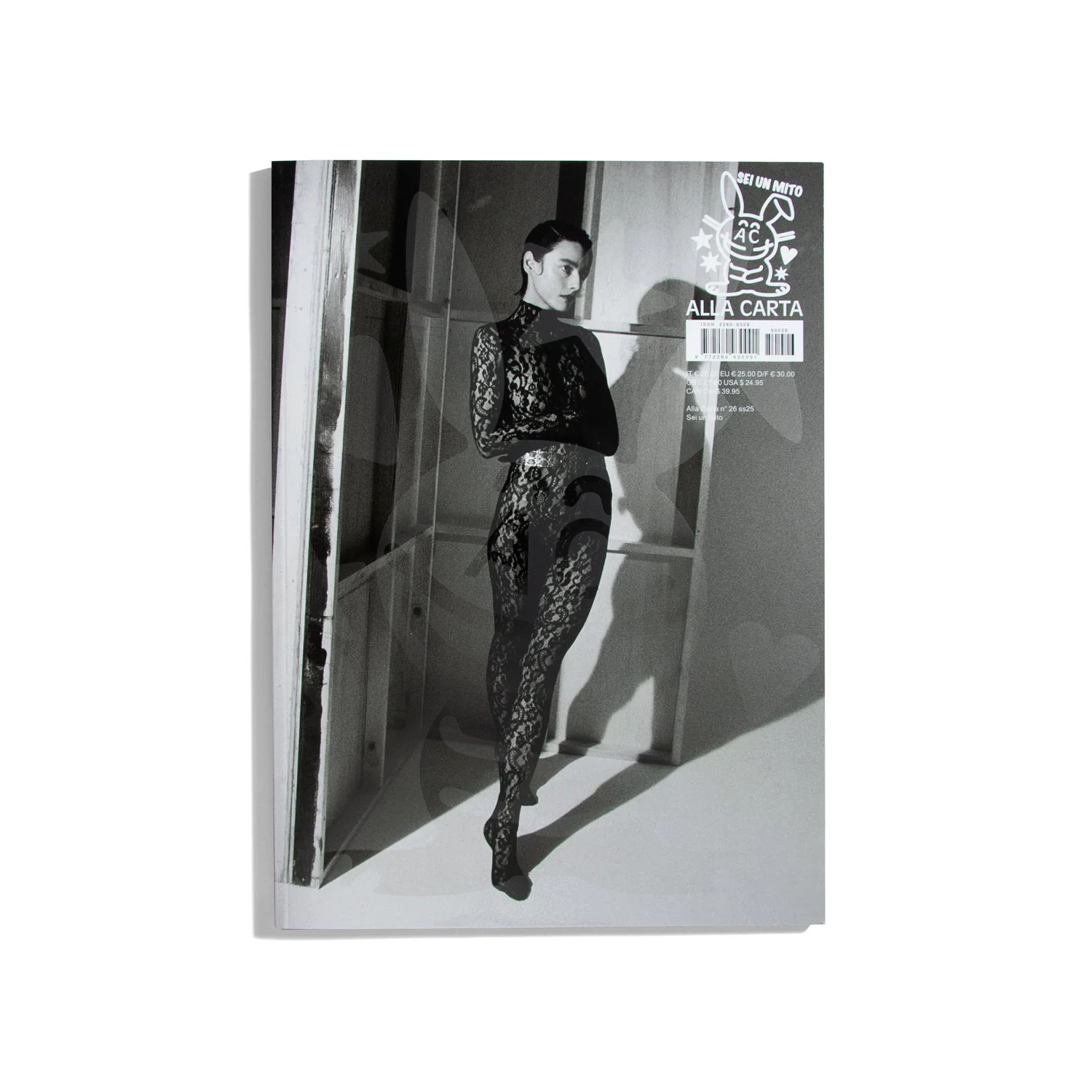
Alla Carta #26 S/S 2025
The term “idol” has ancient roots, originally tied to religious devotion. Over time, however, the idea of the idol has evolved, and veneration has shifted from the divine to a person or symbol embodying collective ideals and desires. The cult of the supernatural—of gods or demigods—has given way to the cult of earthly, human idols.
In 1993, the Italian pop group 883 released Sei un mito (You’re a Legend), describing the object of their devotion as someone unreachable, impossible. Today, contemporary idol worship plays out in followers, likes, and views, while fame—once a byproduct of exceptional skill or talent—has become an end in itself.
Legend is now humanised, stripped of its golden aura, fuelling the illusion that fame is within everyone’s reach. The contemporary idol is an ordinary person who reflects the aspirations, desires, and sometimes the disappointments of ordinary people. In a time driven by market frenzy and a hunger for consumption, we are constantly encouraged to manufacture new idols—only to consume them like the latest seasonal trend.
In this issue of Alla Carta, we wanted to explore what it means to be an idol, a legend, a trend, or a souvenir. In our interview with Maurizio Cattelan, he describes it as being like “a broken clock: you’re right at least twice a day.” But we don’t expect our idols to be right all the time—what’s important is having faith.
Original: $35.33
-65%$35.33
$12.37Produktinformationen
Produktinformationen
Versand & Rückgabe
Versand & Rückgabe
Description
The term “idol” has ancient roots, originally tied to religious devotion. Over time, however, the idea of the idol has evolved, and veneration has shifted from the divine to a person or symbol embodying collective ideals and desires. The cult of the supernatural—of gods or demigods—has given way to the cult of earthly, human idols.
In 1993, the Italian pop group 883 released Sei un mito (You’re a Legend), describing the object of their devotion as someone unreachable, impossible. Today, contemporary idol worship plays out in followers, likes, and views, while fame—once a byproduct of exceptional skill or talent—has become an end in itself.
Legend is now humanised, stripped of its golden aura, fuelling the illusion that fame is within everyone’s reach. The contemporary idol is an ordinary person who reflects the aspirations, desires, and sometimes the disappointments of ordinary people. In a time driven by market frenzy and a hunger for consumption, we are constantly encouraged to manufacture new idols—only to consume them like the latest seasonal trend.
In this issue of Alla Carta, we wanted to explore what it means to be an idol, a legend, a trend, or a souvenir. In our interview with Maurizio Cattelan, he describes it as being like “a broken clock: you’re right at least twice a day.” But we don’t expect our idols to be right all the time—what’s important is having faith.