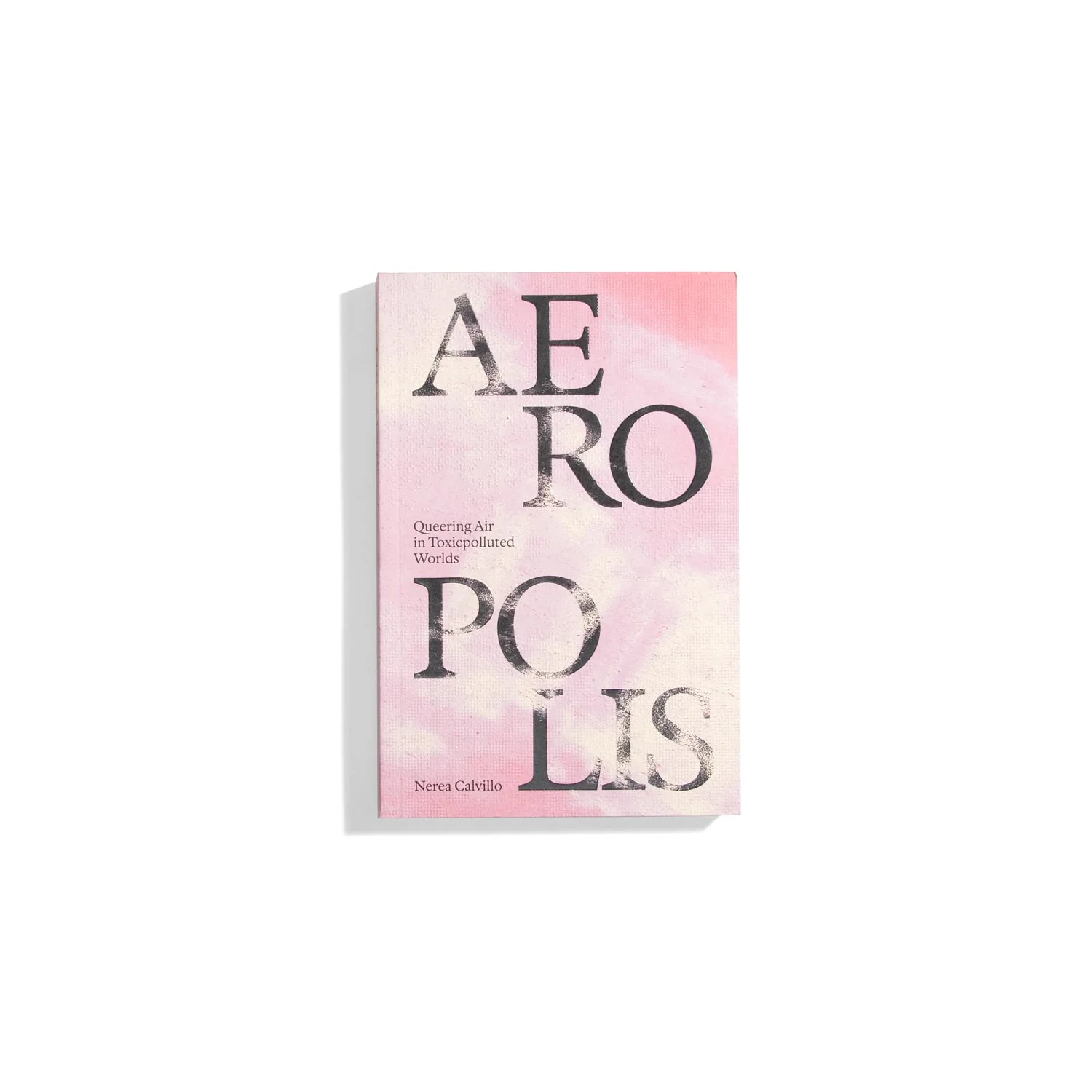
Aeropolis - Nerea Calvillo
How do we get to know air? Aeropolis: Queering Air in Toxicpolluted Worlds offers a speculative and interdisciplinary framework to reorient common understandings of air and air pollution as matter “out there.” Aeropolis contests regimes of managing air which ultimately operate toward upholding dominant modes of world-making that are dependent on forms of exclusion and inequity. Instead, Aeropolis proposes that air is thought of as a city, to center its social, cultural, political, ecological entanglements. Drawing upon feminist technoscience and queer ecological frameworks, Aeropolis moves away from solutions toward a methodology of “designing-thinking-making” that redirects and connects our understandings of air—as designers, as citizens—with ongoing struggles for just futures.
Moving through a series of design interventions, histories of air, and theoretical coordinates, Aeropolis thinks with air across its many forms—through smog and dust, bodies and breath, pollen and weeds, and from urban design to geopolitics, polluted environments to open data, parks to aerial infrastructures. It insists that we acknowledge the diversity of air and its relation to humans, non-humans, and environments, both physically and affectively. That we become sensible to air by following its unruliness—by living, breathing, seeing, holding, touching, queering airs.
Produktinformationen
Produktinformationen
Versand & Rückgabe
Versand & Rückgabe
Description
How do we get to know air? Aeropolis: Queering Air in Toxicpolluted Worlds offers a speculative and interdisciplinary framework to reorient common understandings of air and air pollution as matter “out there.” Aeropolis contests regimes of managing air which ultimately operate toward upholding dominant modes of world-making that are dependent on forms of exclusion and inequity. Instead, Aeropolis proposes that air is thought of as a city, to center its social, cultural, political, ecological entanglements. Drawing upon feminist technoscience and queer ecological frameworks, Aeropolis moves away from solutions toward a methodology of “designing-thinking-making” that redirects and connects our understandings of air—as designers, as citizens—with ongoing struggles for just futures.
Moving through a series of design interventions, histories of air, and theoretical coordinates, Aeropolis thinks with air across its many forms—through smog and dust, bodies and breath, pollen and weeds, and from urban design to geopolitics, polluted environments to open data, parks to aerial infrastructures. It insists that we acknowledge the diversity of air and its relation to humans, non-humans, and environments, both physically and affectively. That we become sensible to air by following its unruliness—by living, breathing, seeing, holding, touching, queering airs.