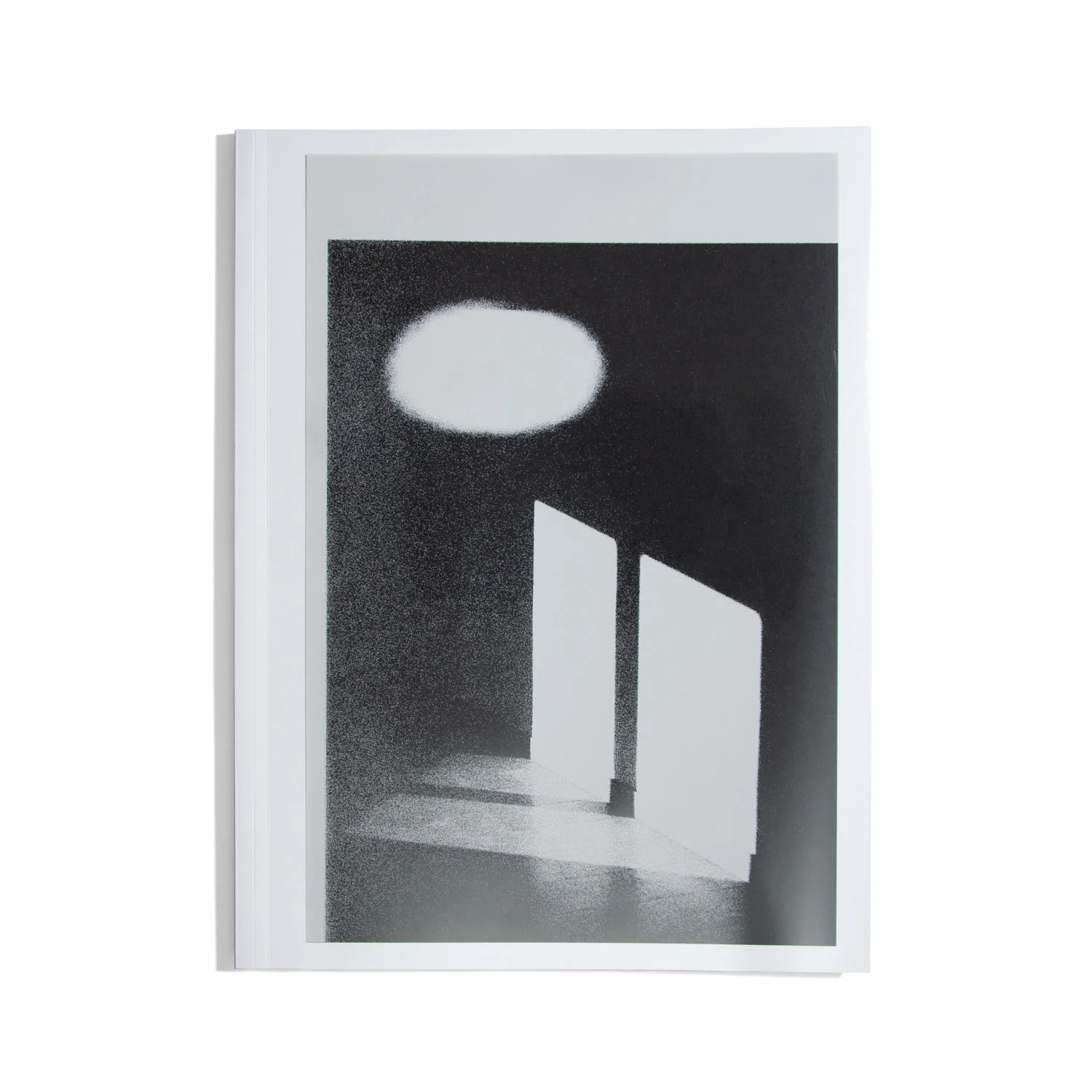
A Close Up of a large Rock, I think - Sebastian Stadler
Sebastian Stadler’s book work A CLOSE UP OF A LARGE ROCK, I THINK. combines the artist’s photographic work L’apparition, 2015–2019 with text generated by image-recognition software. moreEach of the images, whether single or in a series, is a double exposure composition: a relatively generic scene or location is merged with a digital texture or surface. This combination sometimes punctures the image; on occasion it barely makes the viewer aware of the artifice of the reproduction. The photographs are combined with two forms of text: either a tentative description, like the book title, or what reads like an unmoored quotation. Both have been generated or sourced by an image-recognition algorithm that Stadler has employed in other works; this has been fed the images of L’apparation. The algorithm first presents its findings with the modest addendum ‘I think’. In a second step this has been cross-referenced with a huge text database, the Project Gutenberg digital library, in order to source unrelated quotations that accord with the image content identified. A screen-printed mylar cover around the publication further articulates the image-layering process. The book is printed on paper that is ultra-high gloss on one side and uncoated on the other. Not all pages have been cut, most remain closed with perforated edges; the book’s edit takes into consideration both surfaces of the paper, as depending on how the book’s signatures are bound, more matt or more gloss becomes visible leafing through. The closed pages hide other images and quotes waiting to be discovered.
Original: $54.17
-65%$54.17
$18.96Produktinformationen
Produktinformationen
Versand & Rückgabe
Versand & Rückgabe
Description
Sebastian Stadler’s book work A CLOSE UP OF A LARGE ROCK, I THINK. combines the artist’s photographic work L’apparition, 2015–2019 with text generated by image-recognition software. moreEach of the images, whether single or in a series, is a double exposure composition: a relatively generic scene or location is merged with a digital texture or surface. This combination sometimes punctures the image; on occasion it barely makes the viewer aware of the artifice of the reproduction. The photographs are combined with two forms of text: either a tentative description, like the book title, or what reads like an unmoored quotation. Both have been generated or sourced by an image-recognition algorithm that Stadler has employed in other works; this has been fed the images of L’apparation. The algorithm first presents its findings with the modest addendum ‘I think’. In a second step this has been cross-referenced with a huge text database, the Project Gutenberg digital library, in order to source unrelated quotations that accord with the image content identified. A screen-printed mylar cover around the publication further articulates the image-layering process. The book is printed on paper that is ultra-high gloss on one side and uncoated on the other. Not all pages have been cut, most remain closed with perforated edges; the book’s edit takes into consideration both surfaces of the paper, as depending on how the book’s signatures are bound, more matt or more gloss becomes visible leafing through. The closed pages hide other images and quotes waiting to be discovered.